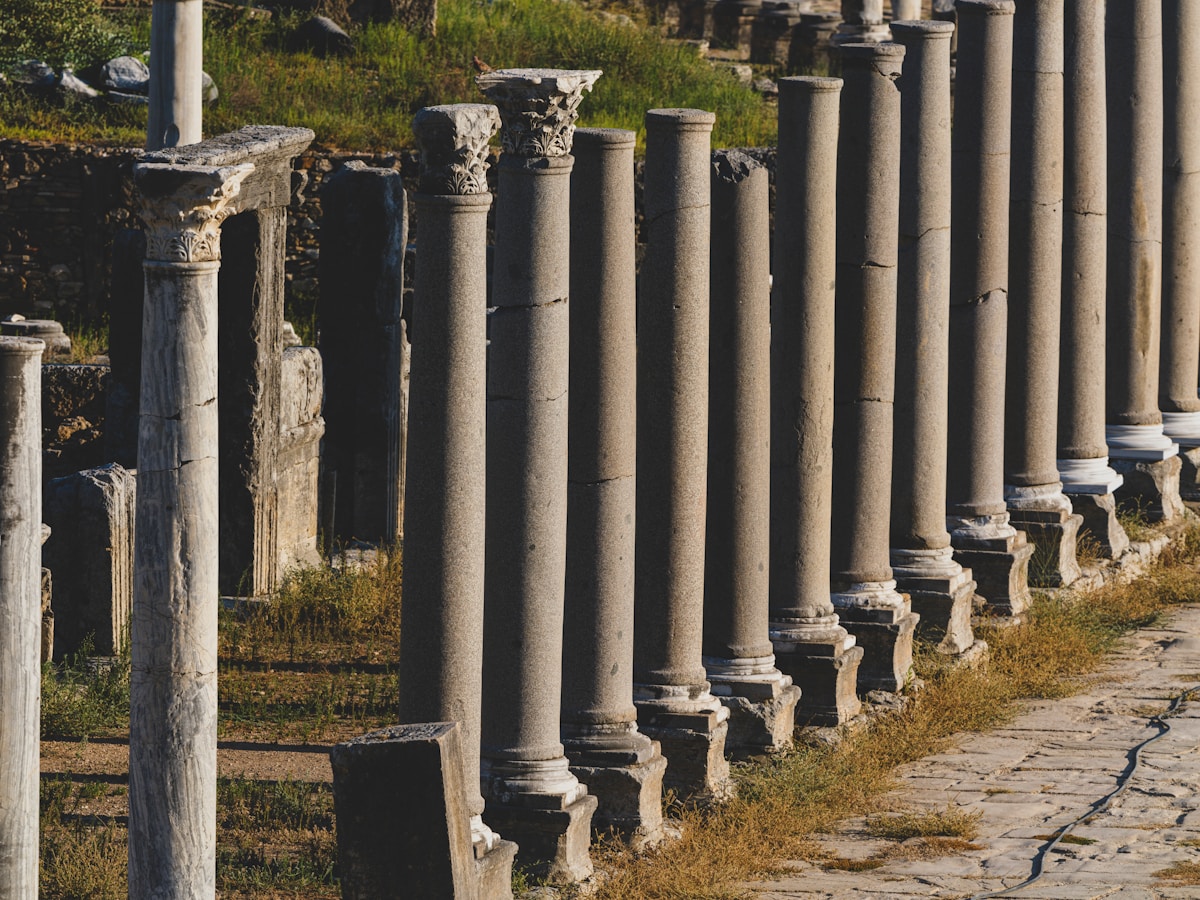
Amasya (ancient Amaseia) is one of the most historically layered cities in the Black Sea hinterland - the capital of the Pontic Kingdom that resisted Rome for decades, the birthplace of the geographer Strabo, a significant Byzantine centre, and an Ottoman imperial city where princes were trained as governors. The valley setting - which determined the form of the city in every historical period - creates a condensed historical landscape visible from a single viewpoint.
The Pontic Kingdom
The Pontic Kingdom (c. 302–64 BCE) was one of the most significant Hellenistic successor states of Alexander’s eastern empire - a kingdom ruled by the Mithridatic dynasty from its original capital at Amaseia (Amasya).
Foundation: The kingdom was founded by Mithridates I (Ktistes - “the Founder”) around 302 BCE, following the fragmentation of Alexander’s empire after his death in 323 BCE. Mithridates claimed descent from the Persian Achaemenid royal line through a Cappadocian-Persian noble family; the kingdom he established combined Persian and Greek cultural elements.
The rock tombs: The burial chambers cut into the cliff above the Yeşilırmak were prepared for the Pontic royal family during the city’s period as the kingdom’s capital. The kings interred here include Pharnaces I and Mithridates IV - the earlier generations of the dynasty before the capital moved to Sinope on the Black Sea coast. The choice of rock-cut burial (rather than tumulus or freestanding tomb) reflects the Persian royal tradition brought west by the Mithridatic dynasty.
Mithridates VI Eupator (r. 120–63 BCE): The greatest of the Pontic kings - a polyglot (reportedly fluent in 22 languages), a military commander who nearly expelled Rome from Asia Minor, and a figure who became a symbol of anti-Roman resistance. His three wars against Rome (89–85 BCE, 83–81 BCE, 73–63 BCE) tested the Republic significantly before his final defeat by Pompey in 63 BCE. Mithridates did not rule from Amasya (the capital had moved to Sinope before his birth) but his dynasty originated here.
Strabo (c. 64 BCE–24 CE): The geographer and historian born in Amaseia. Strabo’s Geographica (17 books) is one of the most significant geographical texts of antiquity - a comprehensive survey of the known world from a Greek and Roman perspective. Strabo was a Pontic aristocrat by birth (his family had served the Mithridatic dynasty) who lived in Rome and Alexandria and traveled widely in the Mediterranean world. His detailed descriptions of the Pontic region draw on personal knowledge of his homeland.
The Roman conquest: Pompey’s final defeat of Mithridates VI in 63 BCE ended the Pontic Kingdom. Amaseia became part of the Roman province of Pontus. The city continued as a significant provincial centre - the administrative organisation that Strabo describes in his Geographica was the Roman structure he grew up under.
Roman and Byzantine Amaseia
Under the Roman Empire, Amaseia was the capital of the province of Pontus - a significant administrative and commercial city connected to the Black Sea coast by road and to the Central Anatolian plateau.
The road network: The Roman road from Amaseia to Sinope (Black Sea coast, 190km north), to Galatia and Ancyra (Ankara) to the southwest, and to Sebasteia (Sivas) to the southeast made the city a communications hub.
Christianity: Amaseia was an early site of Christian community - within the mission field of the Apostle Paul’s journeys through Pontus. The Christian community established itself here in the 1st century CE. The bishop of Amaseia was a significant figure in the early church hierarchy; Amaseia became a seat of a metropolitanate.
Byzantine period: Amaseia continued as a significant Byzantine city - the Pontic road network remained important for Byzantine military logistics; the city was the scene of several Byzantine campaigns against the Persians and, later, the Arabs. The Byzantine fortifications (largely overlaid by later Ottoman construction) enclosed the valley city and the castle ridge above.
The Ilkhanid period - the Bimarhane
The Mongol invasion of Anatolia (1243 Köse Dağ) brought Amasya under Ilkhanate control (the Mongol successor state) after the defeat of the Seljuk Sultanate of Rum.
The Bimarhane (1308–1309): The most significant monument of the Ilkhanid period in Amasya - a combined hospital (bimarhane) and theological school (medrese) built under the Ilkhanate. The building’s architecture - the iwan-courtyard arrangement, the geometric tilework, the carved portal - represents the Ilkhanid aesthetic that bridges Persian, Mongol, and Anatolian traditions. This is the finest Ilkhanid building in northern Anatolia.
Ottoman Amasya
Ottoman control of Amasya was established in the late 14th century - the city became a significant Ottoman provincial centre and, crucially, one of the standard training postings for Ottoman princes.
The prince-governor tradition: The Ottoman succession system - which did not follow primogeniture (elder-son inheritance) but instead made all sons of the sultan potential successors - created an elaborate system of provincial training. Princes were assigned governorships of specific provinces to learn administration under supervision; Amasya was one of the most prestigious of these training postings. Several Ottoman sultans spent their apprentice governorship years in Amasya, including Bayezid II (who governed Amasya before becoming sultan in 1481) and Selim I.
The Treaty of Amasya (1555): The first major peace treaty between the Ottoman and Safavid Empires was signed in Amasya - the Peace of Amasya (1555) concluded the Ottoman-Safavid War of 1532–1555, dividing Mesopotamia and the Caucasus between the two empires and establishing the borders that broadly persisted for the following century.
The Ottoman houses: The Ottoman residential district along the Yeşilırmak riverfront - the houses that define Amasya’s visual character - was built primarily in the 17th–19th centuries, during the period when Amasya’s commercial and administrative importance had somewhat declined from its peak as a prince-governor training centre.
The decline: The Ottoman rationalisation of provincial administration and the end of the prince-governor system (following the fratricidal succession struggles of the late 16th century, which produced a different approach to prince training) reduced Amasya’s imperial significance. The city continued as a regional commercial centre but no longer occupied the position it had during the height of the prince-governor era.
Republican Amasya
Amasya entered the Turkish Republic as a small provincial city in the north-central Anatolian region. The conservative preservation of the Ottoman houses - more a result of economic stagnation than deliberate heritage policy in the 20th century - maintained the riverfront district in a state that allowed later restoration and heritage recognition.
Amasya University: Founded in 2006; approximately 15,000 students. Modest impact on the city’s infrastructure relative to Eskişehir’s Anadolu University but sufficient to maintain a student-café culture.
Heritage designation: Amasya is not yet UNESCO World Heritage-listed (unlike Safranbolu, which was designated in 1994) but is on Turkey’s tentative list. The Ottoman riverfront district and the Pontic tombs are both of the quality that would support a UNESCO designation.
Historical timeline
| Period | Event |
|---|---|
| c. 302 BCE | Pontic Kingdom founded; Amaseia established as capital |
| c. 64 BCE | Strabo born in Amaseia |
| 63 BCE | Roman conquest; Pompey defeats Mithridates VI |
| 1st c. CE | Early Christian community established |
| 1243 | Mongol (Ilkhanate) control after Köse Dağ |
| 1308–1309 | Bimarhane (Ilkhanid hospital/medrese) built |
| 14th c. | Ottoman absorption |
| 15th–16th c. | Prince-governor training centre at peak |
| 1555 | Treaty of Amasya - Ottoman-Safavid peace |
| 17th–19th c. | Ottoman riverfront houses built |
| 2006 | Amasya University founded |
Search hotels in Amasya on Booking.com
Exploring the sites: Browse tours and activities in Amasya for guided historical tours of Amasya - expert commentary makes a significant difference at layered archaeological sites.