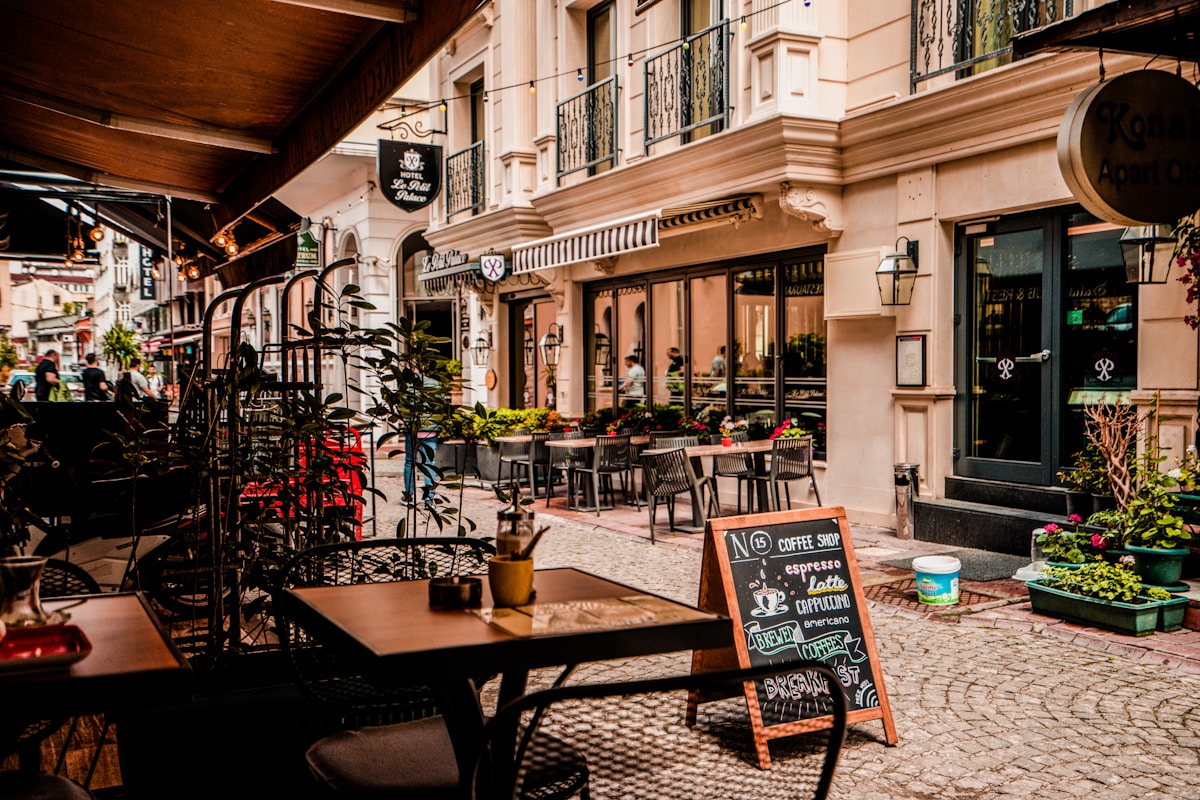
Bodrum is primarily a leisure destination, and its cafe infrastructure reflects this - the emphasis is on atmosphere, sea views, and good coffee rather than the laptop-friendly features (power outlets, stable high-speed WiFi, acoustic space) that remote workers need. That said, working from Bodrum is genuinely pleasant in the shoulder season, and the specialty coffee scene has improved significantly. This guide covers what actually works.
For the full digital nomad picture including visas and coworking, see Bodrum digital nomad guide.
Cafe WiFi in Turkey can drop without warning - we carry an Airalo eSIM as a tethering backup for calls and deadlines. Our Turkey SIM and eSIM guide compares the options.
Turkish coffee culture in Bodrum
Bodrum’s çayhane (tea house) culture is quieter than in inland cities - the tourist economy has diluted the traditional social tea-house scene that dominates places like Gaziantep or Trabzon. You will still find backstreet çayhanes in the old town serving black çay in tulip glasses at ₺15-30 (~$0.45-0.90) per glass, but these are local spaces and not suited to laptop work.
Specialty coffee arrived later in Bodrum than in Istanbul or Ankara, driven by the villa-renting international visitor demographic rather than a local professional class. The bazaar streets behind the castle have a growing number of third-wave-style cafes that arrived from roughly 2017 onward. Yalıkavak’s boutique marina scene has also developed independently, with a cluster of design-led cafes catering to the wealthy summer crowd and a year-round local population. These tend to have better WiFi than the tourist-facing harbour cafes.
Local coffee pricing: Turkish coffee ₺40-70 ($1.20-2.10), filter or V60 ₺80-130 ($2.40-3.90), flat white ₺90-130 (~$2.70-3.90). Prices rise in peak summer as the tourist premium kicks in.
The Bodrum cafe landscape
Tourist cafes (waterfront and bazaar area): Designed for the European tourist market - good coffee, table-service rather than counter, WiFi available, but congested networks in peak season and ambient noise from the tourist promenade. Seating pressure at midday and afternoon.
Specialty coffee shops (bazaar streets and Kıbrıs Caddesi area): A growing number of third-wave coffee shops in the residential streets behind the tourist zone - better WiFi (less congestion), more power outlets, more accepting of extended stays.
Çay bahçesi: Traditional tea gardens are not for laptops. Avoid for productive work.
Hotel cafes: The lobby or terrace cafes at Bodrum’s boutique hotels are generally quiet, have stable WiFi (on the hotel’s dedicated connection), and tolerate extended sessions if you order regularly. Slightly expensive but genuinely productive.
Best areas for cafe working
Bazaar streets (central Bodrum)
The streets behind the main harbour promenade - Atatürk Caddesi, Neyzen Tevfik Caddesi, the cross-streets toward the bazaar - have the most concentrated cafe options that balance atmosphere with functionality. The specialist coffee shops here (identifiable by the espresso equipment visible through the window, pour-over options on the board) are the best bet for all-day working sessions.
Morning sessions (8–11am): Before the tourist traffic builds, the bazaar-area cafes are quiet and productive. Order a coffee (₺60–100, ~$1.80-3.00), establish a seat near an outlet, and get 2–3 hours of solid work in.
Network quality: Ask for the WiFi password and run a speed test before committing to a seat. Tourist-area WiFi ranges from 15 Mbps (congested peak hours) to 80 Mbps (quiet morning). A Turkish SIM hotspot as backup is advisable.
Yalıkavak
The upscale village of Yalıkavak (35km from Bodrum town) has a small but functional cafe scene in its village centre - less crowded than Bodrum town, with a more local clientele and correspondingly more space and less seating pressure. The specialty cafes here cater partly to the villa-renting digital nomad population that Yalıkavak attracts.
Working environment: Better than Bodrum town for extended sessions in peak summer (July–August) - Yalıkavak’s cafes are less saturated with tourist volume. WiFi quality: 40–100 Mbps in the specialist cafes.
Best time: Thursday (market day) morning - the bazaar provides a natural anchor and the cafes are busy but not congested.
WiFi and connectivity
Cafe WiFi: Quality varies significantly. Best practice: test on arrival, and have a mobile hotspot backup.
- Specialty coffee shops in bazaar area: 40–100 Mbps
- Tourist waterfront cafes: 15–50 Mbps (congested in peak hours)
- Hotel lobby cafes: Often the most reliable (dedicated bandwidth, not shared with tourist traffic)
Turkish SIM hotspot: Turkcell 4G LTE provides 30–70 Mbps in central Bodrum and good coverage across the Peninsula. A 30-day tourist SIM (20–40GB): ₺200–350 (~$6.00-10.50) from official Turkcell stores. Essential backup for unreliable cafe WiFi.
Coworking: Bodrum has limited formal coworking infrastructure - one or two spaces in Bodrum town. For pricing and a full assessment, see Bodrum digital nomad guide.
Practical working notes
Power outlets: Significantly less common in Bodrum’s cafes than in Istanbul or Antalya’s Muratpaşa specialty shops. Arrive with a charged laptop and bring a power bank. The specialty coffee shops in the bazaar streets have the most outlets.
Noise: The waterfront promenade cafes are significantly louder than the interior streets. In July–August, ambient noise (music from nearby bars, tourist traffic, harbour activity) can make video calls difficult from outdoor seating. Noise-cancelling headphones are worth packing for Bodrum working.
Summer heat and working hours: The practical working window outdoors is 8am–12pm and 5–7pm in July–August (35°C+ in afternoon). Air-conditioned indoor cafe sections are essential for afternoon productivity. Prioritise cafes with confirmed A/C.
Seasonality: May, June, September, and October are substantially better for cafe working than July–August - cooler, quieter, less congested WiFi, more table availability, and the whole Peninsula is more pleasant at a human pace.
Expected daily spend for cafe working
| Session type | Setting | Cost |
|---|---|---|
| Morning session (3 hrs) | Specialty cafe | ₺120–200 (~$3.60-6.00) (2 coffees) |
| Full day (with lunch) | Specialty cafe + lunch | ₺300–500 (~$9.00-15.00) |
| Hotel lobby | Boutique hotel | ₺150–250 (~$4.50-7.50) (drinks) |
| Coworking day pass | Coworking space | ₺150–300 (~$4.50-9.00) |
Cafe comparison table
| Cafe | Area | WiFi Speed | Price Range | Best For |
|---|---|---|---|---|
| Specialty cafes (bazaar streets) | Central Bodrum | 40–100 Mbps | ₺60–100 (~$1.80-3.00) | Both |
| Tourist waterfront cafes | Harbour promenade | 15–50 Mbps | ₺80–120 (~$2.40-3.60) | Light tasks |
| Hotel lobby cafes | Various | 40–100 Mbps | ₺100–150 (~$3.00-4.50) | Video calls |
| Yalıkavak specialty cafes | Yalıkavak | 40–100 Mbps | ₺70–110 (~$2.10-3.30) | Long sessions |
| Yalıkavak marina cafes | Yalıkavak marina | 30–80 Mbps | ₺90–140 (~$2.70-4.20) | Nomads |
For a complete remote work setup in Bodrum including visas, accommodation, and costs, see Bodrum digital nomad guide. For a more developed nomad infrastructure, compare with İzmir digital nomad guide.