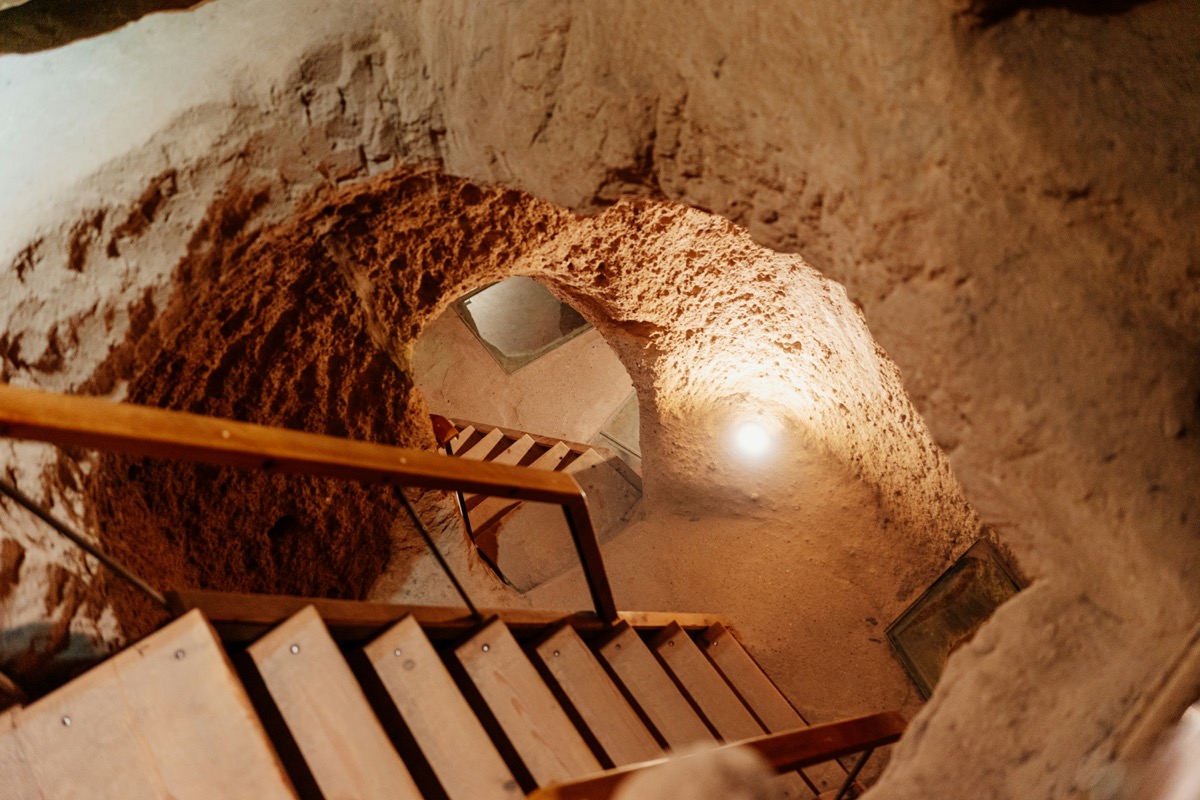
The underground cities of Cappadocia are among the most remarkable human constructions in the world - not for their aesthetic qualities but for their scale, depth, and the conditions they were built to address. Carved into the volcanic tufa over centuries, with origins attributed to the Hittites and significant expansion during the Byzantine period, these subterranean complexes could shelter thousands of people, livestock, food stores, and complete community functions (churches, winepresses, kitchens, stables) from the Arab raids that swept across Anatolia between the 7th and 10th centuries CE.
There are approximately 200 underground settlements of various sizes in Cappadocia. Two are fully excavated and open to visitors: Derinkuyu (the largest and most impressive) and Kaymaklı. A third, Özkonak, is smaller and far less visited.
Derinkuyu
Distance from Göreme: 29km south. 40 minutes by car or taxi.
Entry: ₺350 per person (as of 2026).
Opening hours: 08:00–19:00 April–October; 08:00–17:00 November–March. Closed for maintenance occasionally in winter - confirm before making the trip in December–February.
How to get there:
- Taxi from Göreme: approximately ₺350–450 one way; ₺900–1,200 round trip with 1.5 hours waiting time
- Dolmuş (minibus): Göreme–Nevşehir–Derinkuyu dolmuş. Takes 50–70 minutes with change in Nevşehir; approximately ₺40–60 total. Less convenient but viable.
- Day tour from Göreme: most include Derinkuyu + Kaymaklı + Ihlara Valley or Pigeon Valley, approximately ₺500–900/person including entry fees.
The structure
Derinkuyu is the largest known underground city in the world. The excavated and accessible section covers 8 levels, to a maximum depth of 85 metres - though only the top 5 levels are open to public access. The complex is estimated to have housed 20,000 people at maximum capacity, along with their livestock.
Level 1 (surface access): The entrance corridor, stabling areas for animals, and the first of the circular rolling stone doors - basalt discs approximately 1.5m in diameter and 50cm thick, designed to be rolled across the tunnel from inside, making the entrance impassable from outside. These were the primary defensive mechanism.
Level 2: Communal living and sleeping areas - low-ceilinged rooms with benches carved from the tufa. Ventilation shafts penetrate the rock from here. The width of these corridors (typically 60–80cm in the narrower sections) gives immediate physical context for the conditions of an extended shelter-in-place.
Level 3: Food storage - large carved rooms with amphorae recesses, winepress chambers (the screw-press mechanism is visible), and oil storage. The food storage areas could sustain the population for months. There are also stabling areas at this level.
Level 4: The main communal gathering and religious space - a Byzantine church carved from the rock, cruciform in plan, with a barrel-vaulted nave. The carving quality here is higher than in the utilitarian levels above.
Level 5: The ventilation shaft - 55 metres deep, carved vertically through the rock, large enough for a person to descend but not wide enough for assault. This is the most architecturally dramatic single feature in Derinkuyu: standing at the viewing point and looking straight down 55 metres into cut stone puts the scale of the project into physical terms.
Levels 6–8: Below the public access limit. The lower levels contain a seminary (based on the carved classroom bench arrangements identified by archaeologists), a second church, and storage areas. These remain closed pending further excavation and structural assessment.
History
The earliest carved elements at Derinkuyu have been attributed to the Hittites (Late Bronze Age, c. 1400–1200 BCE), though this attribution is based on indirect evidence rather than definitive inscriptions. The Byzantine expansion - the major engineering work that created the multi-level city as it exists - is well-documented from the 7th–10th centuries CE, when Arab raids repeatedly swept through Anatolia and the underground cities served as emergency refuges.
Derinkuyu was continuously used and modified through the Seljuk and Ottoman periods. The last inhabitants - Christian Cappadocians - evacuated to Greece during the population exchange of 1923. The city was rediscovered in 1963 when a resident found a room behind a wall of his house; systematic excavation began shortly after.
Visiting tips
Claustrophobia: The tunnels are genuinely narrow in sections - shoulders-width in the tightest passages, with head clearance sometimes under 1.6m. If you have any anxiety in confined spaces, the lower accessible levels (4 and 5) will be challenging. The upper levels (1–2) are more spacious. The tunnels are not for everyone; be honest about your comfort level.
Crowds: July and August see significant queues and congestion inside - the narrow passages create bottlenecks when tour groups move through. Arrive at 08:00 opening to beat the tour bus crowds. Weekday mornings in shoulder season are the least congested.
Temperature: The underground city maintains approximately 13–15°C year-round regardless of surface temperature. Bring a layer in summer; this is actually a relief in July–August.
Photography: Permitted inside. The lighting is functional rather than atmospheric - a phone torch or small flashlight helps in the less-lit passages. A wide-angle lens is better than a telephoto for the interior shots.
Kaymaklı
Distance from Göreme: 20km south, 9km north of Derinkuyu.
Entry: ₺350 per person (as of 2026).
Opening hours: 08:00–19:00 April–October; 08:00–17:00 November–March.
Getting there: Taxi from Göreme approximately ₺280–360 one way. Combined Kaymaklı + Derinkuyu taxi day: ₺1,200–1,500 for the vehicle with waiting time.
The structure
Kaymaklı has 4 accessible levels (versus 8 at Derinkuyu) and a wider, more spread-out plan - the tunnels cover a larger horizontal area than Derinkuyu but don’t go as deep. Maximum accessible depth: approximately 40 metres.
What distinguishes Kaymaklı:
- The residential rooms are better preserved and more detailed - carved niches for oil lamps, recessed storage, and the physical evidence of daily life are more legible here
- The winepress chamber is large and well-preserved - one of the clearest examples of the agricultural function of the underground cities
- The lower crowds relative to Derinkuyu (by 20–30% in most periods)
- More accessible for those with physical limitations - the passages are slightly wider in key sections, and the total vertical descent is less
The Derinkuyu–Kaymaklı tunnel
According to local tradition and some archaeological evidence, a 9km tunnel connects Derinkuyu and Kaymaklı - allowing the evacuation of people between the two cities. This tunnel has not been fully excavated or confirmed; the sections that have been examined show incomplete carving or collapsed sections. It is not accessible to visitors.
Özkonak
Distance from Göreme: 24km north, 10km from Avanos.
Entry: ₺150 (as of 2026).
Opening hours: 08:00–17:30.
The smallest of the three accessible underground cities - only 4 levels fully excavated, with total capacity estimated at 60,000 people by some archaeologists (the figure seems high given the excavated area). The significant feature at Özkonak is the narrow holes bored through the rolling stone doors - allowing defenders inside to use spears through the holes while the door was sealed, a defensive technique not seen at the other sites.
Far fewer visitors. The entry fee is lower. Worth including if you’re already in Avanos, but not a priority over Derinkuyu or Kaymaklı for first-time visitors.
Planning your visit
| Site | Entry | Depth | Levels (accessible) | Time needed | Distance from Göreme |
|---|---|---|---|---|---|
| Derinkuyu | ₺350 | 85m | 5 | 1–1.5 hrs | 29km |
| Kaymaklı | ₺350 | 40m | 4 | 45–60 min | 20km |
| Özkonak | ₺150 | - | 4 | 30–45 min | 24km (via Avanos) |
Combining with Ihlara Valley: Derinkuyu is 40km northeast of Ihlara - combining both in a full day is the standard tour format. Drive Göreme → Kaymaklı (20 min) → Derinkuyu (20 min from Kaymaklı) → Ihlara Canyon (50 min from Derinkuyu). Return to Göreme via Güzelyurt. Allow 7–8 hours total.
For the broader context of a Cappadocia visit, see the Cappadocia travel guide.
For visiting in the most comfortable conditions, see best time to visit Cappadocia.
Search hotels in Cappadocia on Booking.com
For your visit: Browse tours and activities in Cappadocia for guided experiences in Cappadocia - walking tours, day trips, and activity bookings are available with free cancellation. An eSIM for Turkey keeps you connected without airport SIM queues, and travel insurance covers medical costs and cancellations.