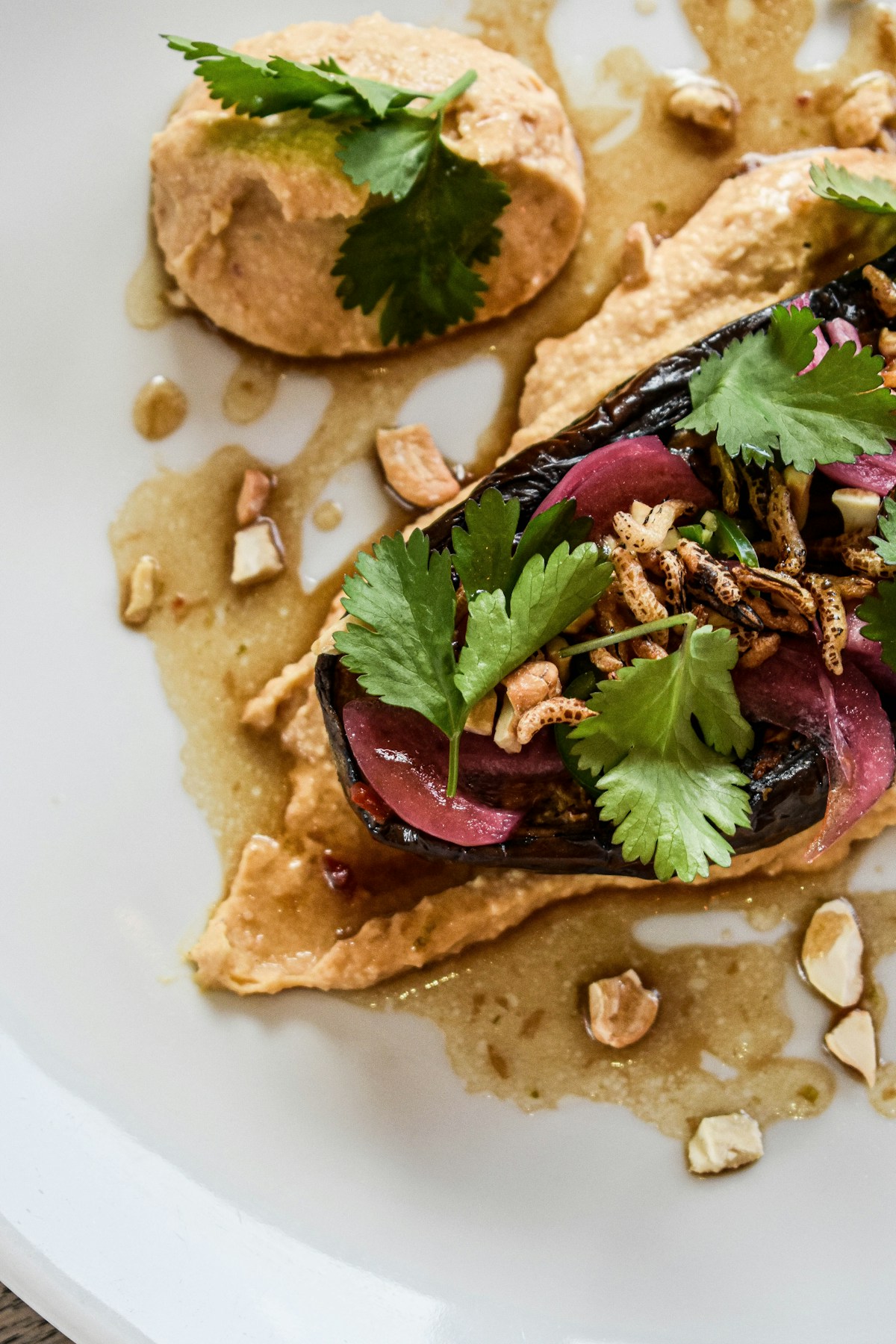
Gaziantep presents a genuine challenge for vegan eating - the food culture is built around lamb, clarified butter, and dairy. The most celebrated foods (baklava, katmer, beyran, kebab) are all animal products. However, the city’s position at the junction of the Arab, Kurdish, and Turkish food traditions creates some specifically good vegan options that aren’t available elsewhere.
The Levantine plant-based tradition
Gaziantep’s food shares roots with the Levantine tradition (Syria, Lebanon) that has some of the world’s best plant-based cooking. This creates specific vegan options:
Hummus: Genuinely good hummus in Gaziantep - chickpea, tahini, lemon, olive oil, served with flatbread. Available at traditional restaurants and meze cafes. ₺80–120.
Muhammara: Roasted red pepper and walnut dip - a Levantine specialty; oil-based; reliably vegan. Served as a meze. ₺80–120.
Tabbouleh: Bulgur, parsley, tomato, lemon, olive oil. Reliably vegan. Available at meze restaurants.
Fasulye piyazı: White beans dressed with olive oil, lemon, onion, and parsley - one of the best simple salads in Turkish cuisine. Always vegan.
Red pepper paste (biber salçası)
Gaziantep’s specific contribution to Turkish pantry culture - the isot pepper paste (biber salçası) made from roasted and dried red peppers, concentrated into a thick paste.
Vegan status: The standard red pepper paste is vegan - just peppers, oil, and salt. Available at market stalls (₺80–200/kg).
How to eat: As a spread on bread; mixed with olive oil; as a cooking ingredient in vegetable dishes.
Pistachios
The Antep fıstığı is entirely plant-based - roasted and salted, or ground into pistachio paste. One of the most delicious plant-based foods available in Turkey.
Price: ₺200–350/kg (harvest season lower); pistachio paste ₺300–500/500g.
Lokanta plant-based staples
The standard Turkish lokanta baseline:
- Mercimek çorbası (lentil soup) - vegan; confirm no butter
- Kuru fasulye - usually vegan; check stock
- Zeytinyağlı dishes - olive oil preparations; usually vegan
Gaziantep lokantas are not more vegan-friendly than the average Turkish lokanta, but the baseline exists.
Lahmacun without meat?
Some lahmacun restaurants will make a vegetable-topping version on request - tomato, pepper, onion, herbs - though this is not a standard menu item. Worth asking: “Etsiz lahmacun yapılır mı?” (Can you make lahmacun without meat?). Success rate: variable.
What to avoid
Baklava: The definitive Gaziantep baklava uses clarified sheep’s butter - not vegan. Some baklavas are made with vegetable oil (check); these are less authentic but vegan.
Katmer: Contains kaymak (clotted cream) - not vegan.
Beyran: Lamb soup - not vegan.
Sücük: Lamb sausage - not vegan.
Turkish vocabulary
| Turkish | Meaning |
|---|---|
| Et yok | No meat |
| Süt yok | No dairy |
| Tereyağsız | Without butter |
| Zeytinyağlı | Olive oil preparation |
| Bu vegan mı? | Is this vegan? |
| İçinde ne var? | What’s in this? |
Practical summary
The honest assessment: Gaziantep is a difficult city for vegan eating. The food culture is centred on animal products; the most celebrated specific dishes are all non-vegan; the international-style plant-based cafes of Istanbul or İzmir are absent.
The specific finds: hummus, muhammara, fasulye piyazı, tabbouleh (from Levantine-influenced restaurants), pistachios, and red pepper paste. These are genuinely good and specifically from this city’s tradition.
For vegan travellers, Gaziantep rewards a short visit for the food culture experience (which is extraordinary even if you’re not eating most of it), and the Zeugma Museum is worth the trip regardless of diet.
Make the most of the food scene: Book a food tour of Gaziantep to sample the standout local spots with a guide who knows where residents actually eat. An eSIM for Turkey keeps you connected for navigating neighbourhoods and checking restaurant hours on the go.