Istanbul is one of the oldest continuously inhabited cities on earth, and almost uniquely in world history, it was the capital of two of the greatest empires ever to exist - the Eastern Roman (Byzantine) Empire and the Ottoman Empire - in succession. The city’s history is legible on its streets: Byzantine walls, Ottoman mosques, Greek churches, Jewish synagogues, and Armenian churches exist within walking distance of each other across the historic peninsula. This guide provides enough historical context to understand what you’re looking at.
Ancient foundations: Byzantium
The city was founded as Byzantium around 657 BCE by Greek colonists from Megara, according to ancient sources (actual founding date debated). The site was chosen for the same reasons that made it the capital of two empires: a triangular promontory between the Golden Horn and the Sea of Marmara, with Asia visible across the Bosphorus. Defensible on three sides by water; controllable from the single landward approach.
For the first millennium, Byzantium was a prosperous but unremarkable Greek trading city. It changed hands between Persia, Athens, Sparta, and Macedon, and was eventually incorporated into the Roman Empire in 196 CE.
Constantinople: capital of the Roman east
In 324 CE, the Emperor Constantine I (Constantine the Great) selected Byzantium as the site for a new imperial capital. He renamed it Constantinople (“city of Constantine”) and consecrated it on 11 May 330 CE. The decision was strategic - Rome was increasingly peripheral to the empire’s problems, which centred on the eastern frontier and the wealthy eastern provinces.
Constantine commissioned the Hippodrome (chariot racing arena - the Sultanahmet meydanı area today, with the Serpent Column still standing as a remnant), city walls, and proto-Christian churches. His son Constantius II and successor emperors continued the building programme. The Column of Constantine (Çemberlitaş - the burned column in Sultanahmet) still stands from this period, though the statue of Constantine himself is long gone.
Theodosius I (379–395 CE) made Christianity the state religion and built the Theodosian Walls - the triple circuit of land walls that protected the city from the landward approach. These walls, stretching 5.7km across the peninsula, were essentially impenetrable for over a thousand years. You can walk them today in the Edirnekapı-Yedikule area.
The Byzantine peak
Justinian I (527–565 CE) is the most consequential emperor for the Istanbul you see today. After the Nika Riots of 532 burned much of the city, Justinian commissioned a total rebuilding programme. The centrepiece: Hagia Sophia (Aya Sofya), completed in 537 CE and the largest cathedral in the world for nearly a thousand years. The engineering - a massive dome appearing to float over the nave - was unprecedented. Justinian also built the Basilica Cistern (Yerebatan Sarnıcı) in the same period - the underground water storage system still visible today.
The Byzantine Empire controlled territories from Spain to Egypt at its greatest extent but progressively contracted under pressure from the Sassanid Persians, Arab Muslim armies (7th-8th centuries), and the Seljuk Turks (11th century). The catastrophic sack by the Fourth Crusade in 1204 - when Crusader armies, nominally allied with the Byzantines, attacked and pillaged Constantinople for three days - damaged the empire fundamentally. It never fully recovered.
The Byzantine/Mosaic Museum at Sultanahmet, the Kariye Museum (Chora Church) at Edirnekapı, and the Hagia Sophia preserve the best surviving Byzantine art in the city. The Chora Church mosaics - Christ and the Virgin in various narrative cycles - are considered the finest Byzantine mosaics in the world after Ravenna.
The Ottoman conquest: 29 May 1453
The fall of Constantinople to Mehmed II (‘The Conqueror’) on 29 May 1453 is one of the defining moments of world history. After a 53-day siege, Ottoman forces broke through the Theodosian Walls at a section near the Edirnekapı gate. The last Byzantine emperor, Constantine XI Palaiologos, died fighting, body never identified.
Mehmed entered the city on the same day and rode to Hagia Sophia, which was converted to a mosque immediately. He was 21 years old.
The Ottoman capture of Constantinople effectively ended the Middle Ages in the European historical narrative. It also ended Byzantine culture - Greek scholars fled to Italy carrying manuscripts, contributing to the Italian Renaissance.
The Ottoman imperial capital
Mehmed II began systematic rebuilding almost immediately. He moved the Ottoman court to the new Topkapi Palace (construction began 1459), which would serve as the imperial residence and administrative centre until 1856. He also initiated the repopulation of a city depleted by siege, bringing in Armenians, Jews expelled from Spain, and Anatolian Turks.
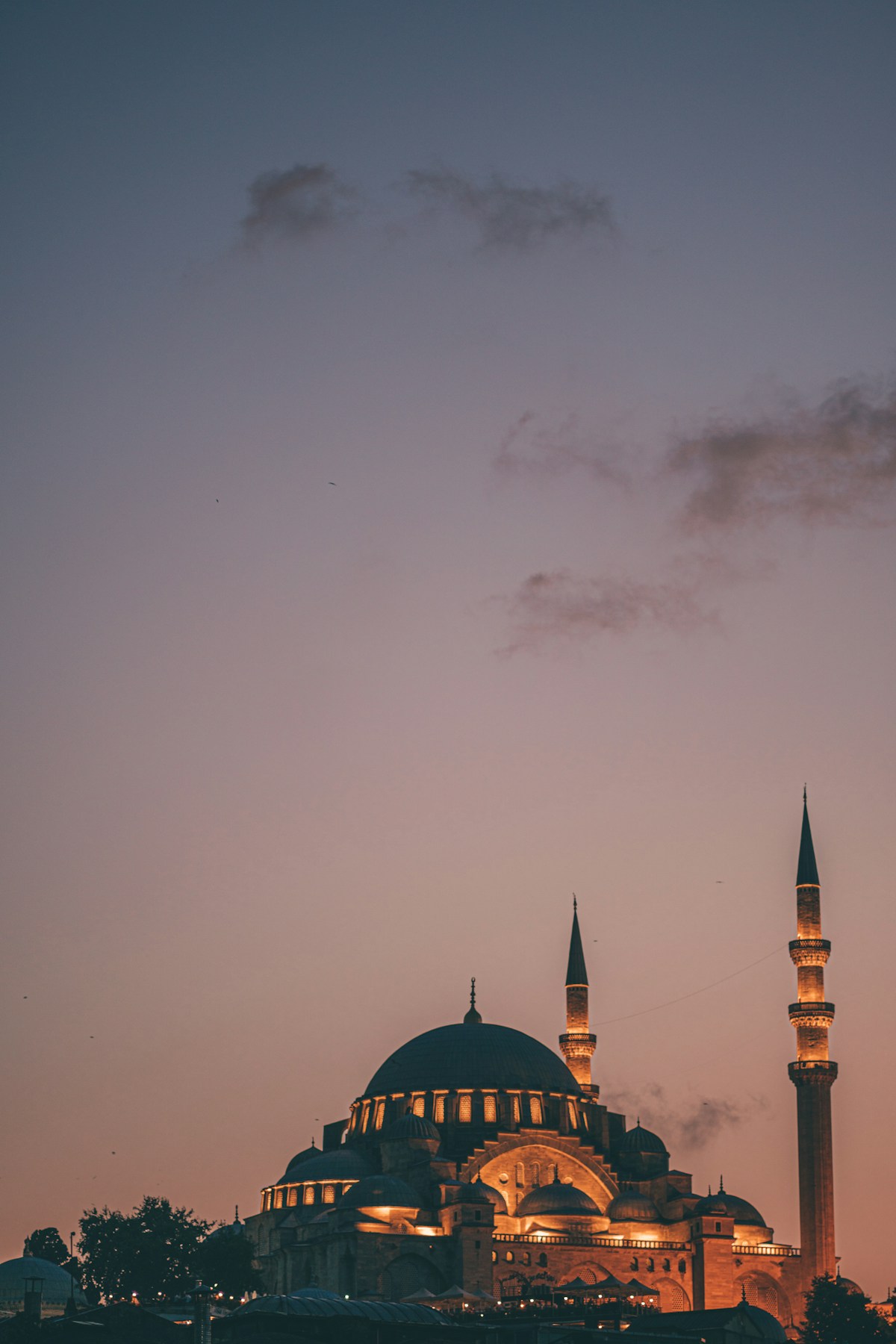
The great age of Ottoman building reached its peak under Süleyman the Magnificent (1520–1566) and his court architect Mimar Sinan, who designed or supervised over 300 buildings including the Süleymaniye Mosque (1557), considered his greatest work, and the Şehzade Mosque. Sinan’s work synthesised Byzantine dome engineering with Ottoman spatial design to create a distinct architectural form - high, light-filled, expansive interiors under cascading domes.
Under Süleyman, the empire stretched from Hungary to Arabia, from Morocco to Mesopotamia. Istanbul was the wealthiest city in the world. The Grand Bazaar (Kapalıçarşı, built from 1455) and Spice Bazaar (1660s) were economic and logistical engines of this empire.
Decline and the Tanzimat era
The 18th and 19th centuries brought Ottoman military decline, territorial losses, and increasing European pressure. The empire responded with the Tanzimat reforms (1839–1876) - modernisation of the legal system, equal rights for non-Muslim subjects, and European-style administration.
Dolmabahçe Palace (built 1853) replaced Topkapi as the imperial residence precisely because it was European in style - baroque and crystal and chandelier, the opposite of the Ottoman tradition. Abdülmecid I and subsequent sultans lived here; Atatürk died here on 10 November 1938.
The Republic and modern Istanbul
The Ottoman Empire entered World War I on the German side in 1914 and collapsed in 1918. Anatolia was occupied by Allied forces; Mustafa Kemal Atatürk led the Turkish War of Independence (1919–1923), defeating Greek, French, and British-aligned forces and establishing the Turkish Republic on 29 October 1923.
The capital moved to Ankara, deliberately distancing the new republic from the Ottoman imperial legacy. Istanbul declined in political importance but remained the economic and cultural centre. The population exchanges of 1923 expelled most Greeks and Armenians in exchange for Turkish populations from Greece, fundamentally changing the city’s demographic character.
The city’s massive growth - from ~1 million in 1950 to over 16 million today - happened largely through rural-to-urban migration from Anatolia. This layered the historic peninsula’s Byzantine and Ottoman heritage with dozens of distinct regional cultures from across Turkey.
Key historical sites to visit
| Site | Period | Entry | Notes |
|---|---|---|---|
| Hagia Sophia | Byzantine 537 CE | Free (mosque) | Dress code; remove shoes |
| Topkapi Palace | Ottoman 1459 | ₺600 | Allow 3–4 hours |
| Basilica Cistern | Byzantine 532 CE | ₺300 | 30–45 min |
| Theodosian Walls | Byzantine 413 CE | Free | Walk the Edirnekapı section |
| Kariye (Chora Church) | Byzantine 14th C | ₺400 | Best mosaics after Hagia Sophia |
| Hippodrome/Sultanahmet Square | Roman/Byzantine | Free | Obelisk, Serpent Column, Milion |
| Grand Bazaar | Ottoman 1455 | Free | Mon–Sat |
| Süleymaniye Mosque | Ottoman 1557 | Free | Sinan’s masterwork |
| Dolmabahçe Palace | Ottoman 1853 | ₺600–900 | Guided tour only |
The Istanbul things to do guide has practical detail - opening hours, queuing advice, and how to combine sites efficiently.
Search hotels in Istanbul on Booking.com
Exploring the sites: Browse tours and activities in Istanbul for guided historical tours of Istanbul - expert commentary makes a significant difference at layered archaeological sites.