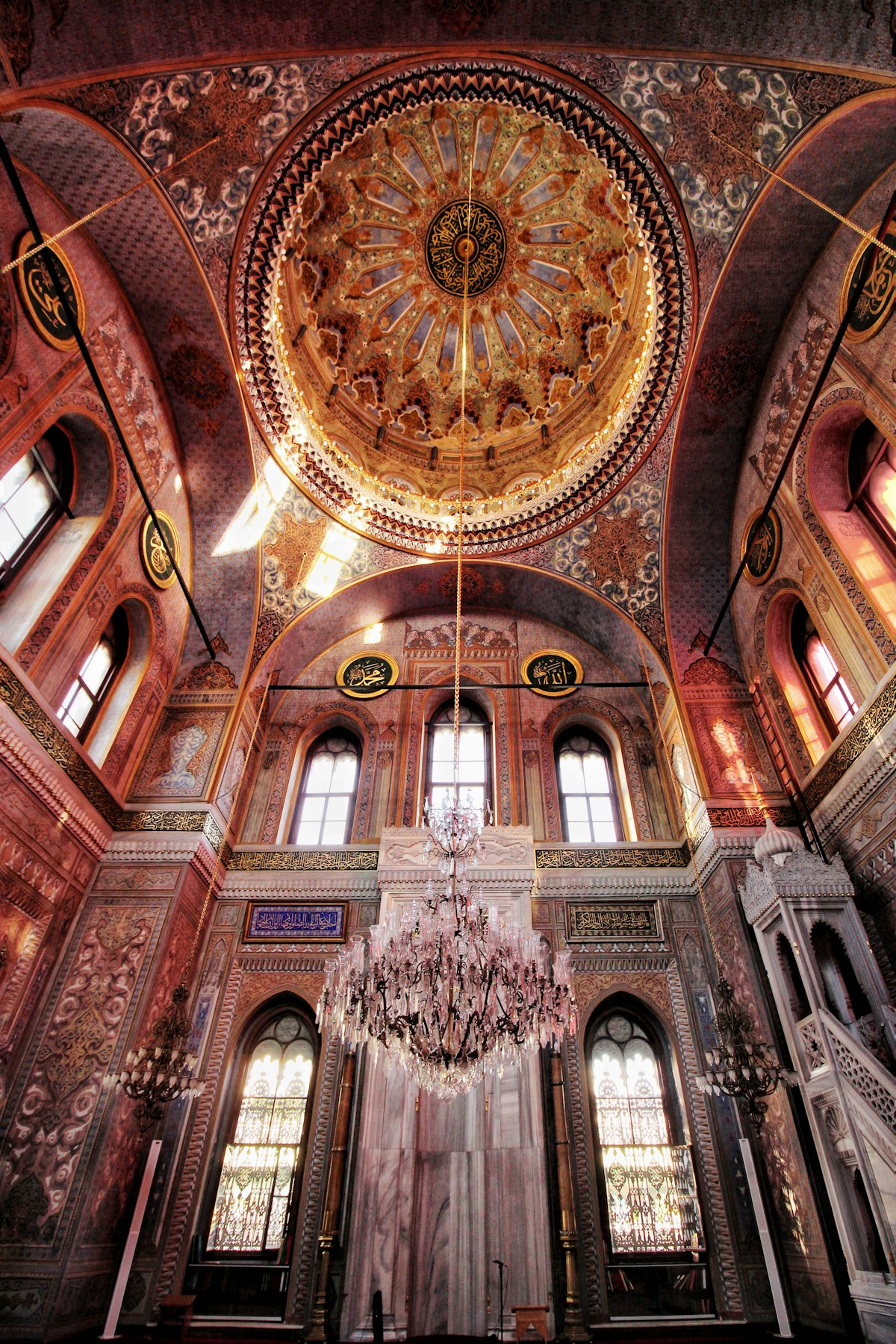
Bursa’s defining historical moment is the Ottoman conquest of 1326 - but the city’s history extends back two millennia before that event, and the decades that followed the conquest produced the physical monuments (the Green Mosque, the Grand Mosque, the Koza Han) that make Bursa’s historical district one of the finest concentrations of early Ottoman architecture in the world.
Ancient Prusa
Foundation: The city of Prusa (Προῦσα) was founded in the 3rd century BCE - the traditional founding date given by ancient sources is 202 BCE, attributed to Prusias I, king of Bithynia, though the site may have been inhabited earlier.
Bithynian kingdom: Prusa was a city of the Bithynian kingdom - the Hellenistic kingdom in northwestern Anatolia between the Pontic coast and the Phrygian plateau. The Bithynian kings ruled from their capitals at Nicomedia (modern İzmit) and occasionally Prusa, maintaining independence from both the Seleucid Empire to the east and the major Macedonian successor states to the west.
Roman province: The Bithynian kingdom was bequeathed to Rome by its last king, Nicomedes IV, on his death in 74 BCE - becoming the Roman province of Bithynia et Pontus. Prusa was a provincial city of moderate importance within this Roman province.
Pliny the Younger: The Roman writer and administrator Pliny the Younger served as governor of Bithynia-Pontus under Emperor Trajan (111–113 CE). His correspondence with Trajan - collected in his Letters, Book X - includes detailed discussions of the administration of Prusa and other Bithynian cities. These letters are among the most important primary sources for provincial Roman administration and early Christian persecution policy.
Thermal springs: The natural thermal springs above Prusa (the modern Çekirge district) were known and used in antiquity. The Roman period development of the baths established the pattern of thermal use that continues today.
Byzantine Prusa (Bursa)
The name “Bursa” is a Byzantine-period corruption of “Prusa” - the name shift occurred gradually through the Byzantine period as Greek pronunciation evolved.
Early Byzantine: Bursa was a city of the Byzantine (Eastern Roman) Empire, under the ecclesiastical jurisdiction of the Church of Nicaea (nearby İznik, where the critical Council of Nicaea of 325 CE was held). The city’s Christian character was embedded; churches and a bishop’s see were established.
Arab raids: The 7th–8th century Arab expansion brought raids across Byzantine Anatolia. Bursa, positioned on the northern slopes of the Mysian Olympus (modern Uludağ), was partially protected by the mountain but not immune.
Later Byzantine period: By the 13th century, the Byzantine Empire had been significantly weakened - the Fourth Crusade’s sack of Constantinople in 1204 produced the Latin Empire and scattered Byzantine successor states. The Empire of Nicaea (centred at İznik, 75km east of Bursa) controlled northwestern Anatolia during this period. The Byzantine recovery of Constantinople in 1261 left western Anatolia increasingly exposed to the new Turkic powers forming in the interior.
The founding of the Ottoman state and the siege of Bursa (1317–1326)
Osman I and the early Ottoman state: Osman I (died c. 1324–1326) led a frontier principality (beylik) in northwestern Anatolia, based around Söğüt to the southeast. The Ottoman state was one of several Turkic beyliks that emerged as Byzantine control of Anatolia weakened.
The siege: The city of Prusa/Bursa was besieged by the Osmanlı forces beginning around 1317. The siege was extended - the city’s natural defenses (the citadel hill, the mountain behind, the walls) made it defensible, and Byzantine garrisons held out for years. The Byzantine garrison finally surrendered in April 1326.
Osman’s death: Osman I died shortly before or immediately after the city’s fall - tradition holds that he expressed a wish to be buried there if it fell in his lifetime. The tomb of Osman I on the Tophane hill is the founding monument of the Ottoman state.
Orhan I (reigned 1326–1362): Osman’s son Orhan received the city’s surrender and made Bursa the first Ottoman capital. The subsequent decades saw Orhan consolidate Ottoman power in northwestern Anatolia, cross into Europe via the Dardanelles, and establish the administrative structures of what would become the Ottoman Empire.
Bursa as Ottoman capital (1326–1365)
Bursa was the Ottoman capital for approximately forty years - from the 1326 conquest until Murad I moved the capital to Edirne after the Ottoman expansion into the Balkans.
The building programme: The early Ottoman sultans built extensively in Bursa - mosques, hans (caravanserais), madrasas, and the thermal bath complexes. The buildings of this period are the foundation of Bursa’s architectural significance.
Orhan Cami: One of the earliest surviving Ottoman mosques (1330s–1340s), in the city centre. The T-plan zawiyas (dervish lodges incorporated into mosque complexes) developed in Bursa were an early Ottoman architectural form.
Silk Road terminus: The Ottoman conquest placed Bursa as the western terminus of the Silk Road - the trade route from Central Asia and China that had operated through Mongol-controlled territory. The establishment of the Koza Han and other commercial infrastructure in the 14th–15th centuries formalised Bursa’s position in the continental trade network.
The Green Mosque and Mehmed I (1413–1421)
The Ottoman civil war (1402–1413) - triggered by Timur’s defeat and capture of Sultan Bayezid I at the Battle of Ankara in 1402 - produced a decade of conflict among Bayezid’s sons. Mehmed I emerged as sole sultan in 1413.
Mehmed I’s restoration: After reunifying the Ottoman state, Mehmed I commissioned the Green Mosque and Green Tomb as expressions of Ottoman power and architectural achievement. The choice of Bursa - his father’s and grandfather’s burial city - was deliberate.
The Green Mosque (Yeşil Cami, 1419 CE): Architect Hacı İvaz Paşa’s masterwork - the finest building of the early Ottoman period. The tilework quality reflects both the proximity to İznik (the tile production centre) and the wealth available from the reconstituted Silk Road trade.
Mehmed I’s tomb: The Green Tomb (1421) - the octagonal turquoise-tiled mausoleum - was completed after the sultan’s death. It established a burial tradition that continued with subsequent Ottoman sultans being buried in Bursa (Bayezid II built his own complex; the Muradiye complex contains multiple imperial tombs).
The Grand Mosque (Ulu Cami) and Bayezid I
Bayezid I (reigned 1389–1402): The sultan who built the Grand Mosque - constructed between 1396 and 1399 following the Battle of Nicopolis (1396), in which a large European crusading army was defeated. The 20-dome structure was his most significant building contribution.
The Battle of Ankara (1402): On the plain east of modern Ankara, Timur (Tamerlane) defeated Bayezid I in one of the Ottoman Empire’s most significant defeats. Bayezid was captured and died in captivity (1403). The battle temporarily fragmented the empire and interrupted Bursa’s development.
Muradiye complex and later imperial tombs
The Muradiye complex (built by Murad II, 1450s) in Bursa contains multiple imperial tombs - the mausoleums of Murad II and several of his sons and the sons of Mehmed II. The complex is one of the finest concentrations of Ottoman tilework and funerary architecture outside Istanbul.
Republican Bursa
The Turkish War of Independence (1919–1922) brought Greek occupation of parts of northwestern Anatolia, including the Bursa region. Greek forces occupied Bursa in July 1920; the city was retaken by Turkish nationalist forces in September 1922 as part of the final campaign of the war.
Industrial development: Republican-era Bursa developed as a major industrial city - textiles (the silk tradition transitioning to synthetic and cotton), and from the 1960s, automotive manufacturing. The Renault and Fiat (TOFAŞ) plants established in Bursa made it Turkey’s automobile production centre.
UNESCO World Heritage (2014): “Bursa and Cumalıkızık: the Birth of the Ottoman Empire” was inscribed on the UNESCO World Heritage List in 2014, recognising the Green Mosque, the Grand Mosque, the Koza Han, and the village of Cumalıkızık as an exceptional ensemble of early Ottoman civilisation.
Historical timeline
| Period | Event |
|---|---|
| c. 202 BCE | Prusa founded by Prusias I of Bithynia |
| 74 BCE | Bithynia bequeathed to Rome; Prusa in Roman province |
| 111–113 CE | Pliny the Younger governor of Bithynia-Pontus |
| 325 CE | Council of Nicaea at nearby İznik |
| 1317 | Ottoman siege of Prusa begins |
| 1326 | Orhan I captures Bursa; first Ottoman capital |
| 1396–1399 | Grand Mosque (Ulu Cami) built by Bayezid I |
| 1402 | Battle of Ankara - Timur defeats Bayezid I |
| 1413 | Mehmed I reunifies Ottoman state |
| 1419 | Green Mosque commissioned |
| 1421 | Green Tomb completed; Mehmed I buried |
| 1365 | Capital moved to Edirne |
| 1491 | Koza Han built by Bayezid II |
| 1867 | İskender kebab created in Bursa |
| 1920 | Greek forces occupy Bursa |
| 1922 | Turkish nationalist forces retake Bursa |
| 2014 | UNESCO World Heritage inscription |
Search hotels in Bursa on Booking.com
Exploring the sites: Browse tours and activities in Bursa for guided historical tours of Bursa - expert commentary makes a significant difference at layered archaeological sites.