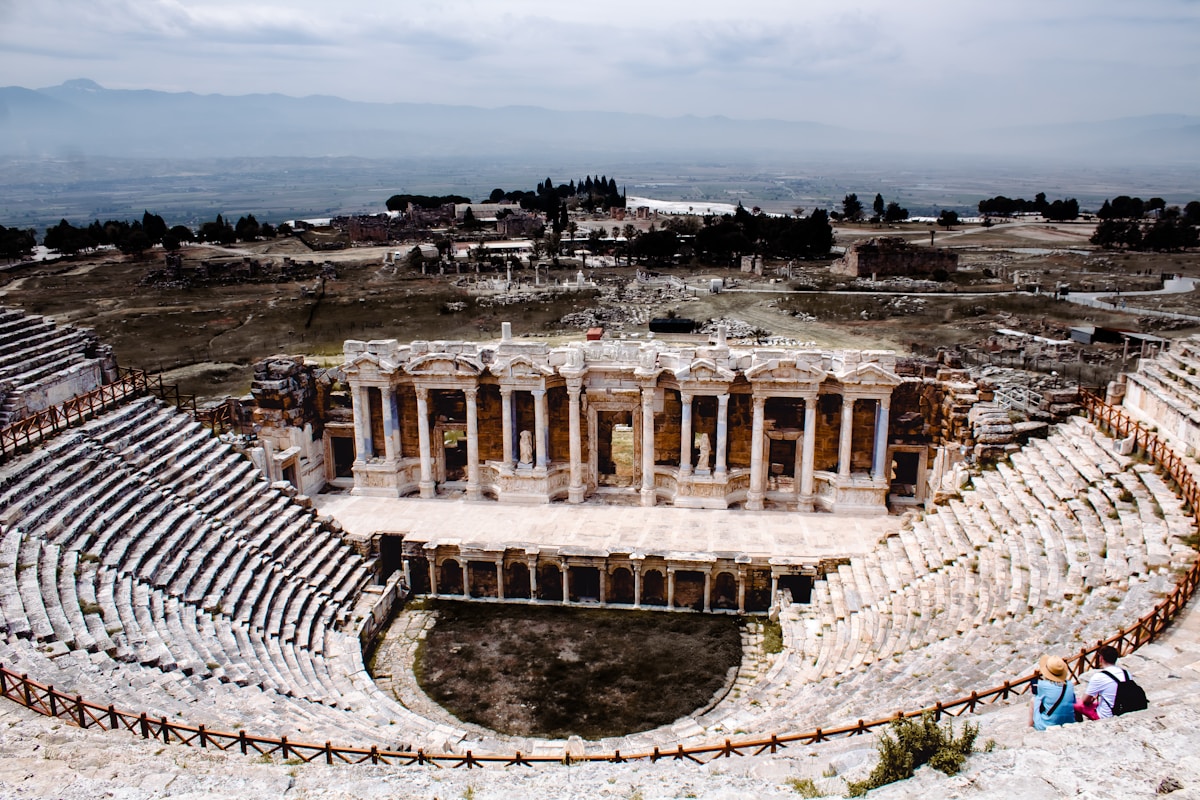
Gaziantep’s history is the history of a Silk Road city at the junction of Anatolia and the Levant - a point where trade routes, armies, and cultural influences from Mesopotamia, Persia, Rome, the Arab world, and Anatolia converged. The ancient city of Zeugma on the Euphrates (90km east), the medieval fortress city of Antep, and the modern urban capital of southeastern Turkey’s economy are phases in a continuous story of commercial and strategic significance.
Ancient Zeugma and the Euphrates crossing
Zeugma (Seleucia Zeugma): The ancient city of Zeugma was founded by Seleucus I Nicator around 300 BCE at the most strategic crossing of the Euphrates - the point where the river could be forded or bridged, giving access to Mesopotamia and the trade routes east. The name Zeugma means “bridge” or “joining” in Greek.
Roman Zeugma: Under Roman control, Zeugma became one of the wealthiest cities in the eastern Roman Empire. The 3rd and 4th Legions Scythica were stationed here; the city grew as a trading centre for goods moving between Rome, Parthia, and the east. The mosaic tradition represented in the Zeugma Mosaic Museum reflects the wealth of the Roman merchant and military elite who commissioned them.
The mosaics: The Zeugma mosaics were created primarily in the 1st–3rd centuries CE - the floor decorations of wealthy Roman houses. The themes (Dionysus and followers, hunting scenes, mythological portraits, geometric borders) follow the Roman Mediterranean mosaic tradition but with local elements.
The flooding (2000): The Birecik Dam construction flooded a significant portion of the ancient city - the rescue excavations of 1999–2000 removed the most significant mosaics before submersion. The Zeugma Mosaic Museum was purpose-built to house them.
Medieval Antep
After the Roman period, the site of modern Gaziantep (then called Antep, from the Turkish corruption of earlier names) developed as a medieval fortress city - the citadel on the hill above the modern city was the nucleus.
Byzantine period: Antep was a Byzantine frontier city - the wall between the Byzantine Empire and the Arab caliphates shifted repeatedly through this area from the 7th century CE onward.
Arab and Hamdanid period: The Arab expansion brought Antep under Islamic rule in the 7th century; the Hamdanid dynasty of Aleppo (who controlled much of northern Syria and southeastern Anatolia in the 10th century) influenced the city’s development.
Crusader period: Antep was near the northern frontier of the Crusader County of Edessa - one of the first Crusader states. The complex intersection of Crusader, Byzantine, Arab, and Seljuk politics in this area through the 12th century shaped the city’s culture.
Mamluk control: The Mamluk Sultanate of Egypt controlled Antep and the surrounding region from the 13th century until the Ottoman conquest.
Ottoman Antep (1516–1919)
Sultan Selim I’s 1516 eastern campaign - the same that brought Mardin, Aleppo, and Egypt into the Ottoman Empire - absorbed Antep. The city became part of the Aleppo province (vilayet).
Commercial development: Under the Ottomans, Antep grew as a commercial city on the trade routes between Aleppo and Anatolia. The copper bazaar, the han system, and the bazaar infrastructure of the old city developed through the 16th–19th centuries.
The Armenian community: Antep had a significant Armenian community through the Ottoman period - merchants, craftsmen, and professionals. The Armenian community contributed substantially to the city’s food culture (see the Gaziantep food guide) and to its commercial and intellectual life.
The 1895–1896 Hamidian massacres: The systematic massacres of Armenians across the Ottoman Empire ordered by Sultan Abdülhamid II struck Antep’s Armenian community in 1895. Several hundred Armenians were killed; the community survived but diminished.
The Armenian Genocide in Antep (1914–1922)
The Armenian Genocide of 1914–1918 devastated the Antep Armenian community - one of the largest Armenian communities in Anatolia outside Constantinople.
The deportations: Beginning in 1915, the Armenian population of Antep was deported - the deportation orders were applied sequentially, with different categories of the population removed at different times.
The American relief effort: Antep was one of the areas where American Protestant missionary presence was substantial - the missionaries documented the deportations and attempted to provide relief. The Near East Relief organization (later CARE’s predecessor) operated in Antep; the documentation they produced is among the most detailed available for any city in the genocide.
Population change: Pre-1915, Armenians comprised approximately 25–30% of Antep’s population. By 1922, the Armenian community had been effectively eliminated - killed, deported to the Syrian desert, or forced to flee.
The Battle of Antep and “Gazi” status (1920–1921)
The Turkish War of Independence’s southeastern front included a significant engagement at Antep - the resistance to French occupation that earned the city its honorary prefix.
Background: After World War I, France occupied southeastern Anatolia under the terms of the Sykes-Picot arrangement (the French mandate for Syria was extended northward). French forces (including Armenian and Senegalese troops, creating particular emotional tension given the recent genocide) occupied Antep in March 1920.
The resistance (1920–1921): Turkish nationalist forces and civilian resistance fighters defended the city against French siege for ten months. The resistance became a symbol of nationalist determination.
The women’s participation: Antep women - carrying ammunition, organizing supply lines, participating directly in the defense - became national symbols. The specific legend of a young woman (Şehide Adile) who died carrying ammunition was memorialized in Republican iconography.
The result: The French withdrew from southeastern Anatolia following the Franco-Turkish Agreement (Ankara Agreement) of October 1921. The successful defense of Antep was recognized by the Grand National Assembly with the honorary title “Gazi” (Warrior, Veteran) - hence Gaziantep.
Republican Gaziantep
Modern Gaziantep is a major industrial and commercial city - copper processing, food manufacturing (the pistachio industry), plastics, and textiles. The city has the seventh-largest economy of any Turkish city.
The food industry: Gaziantep’s food manufacturing sector - baklava, pasta, pistachio products - has grown into a significant export industry. Gaziantep baklava is exported worldwide.
UNESCO designation (2015): The UNESCO Creative City of Gastronomy designation recognized the depth and originality of the food culture and has significantly increased international food tourism to the city.
Historical timeline
| Period | Event |
|---|---|
| c. 300 BCE | Zeugma founded by Seleucus I |
| 1st–3rd c. CE | Peak of Roman Zeugma; mosaic production |
| 636 CE | Arab conquest |
| 1516 | Ottoman conquest under Selim I |
| 1895 | Hamidian massacres; Armenian community losses |
| 1914–1918 | Armenian Genocide; Antep community devastated |
| March 1920 | French forces occupy Antep |
| 1920–1921 | Resistance and battle of Antep |
| October 1921 | Franco-Turkish Agreement; French withdrawal |
| 1921 | Grand National Assembly grants “Gazi” title |
| 2000 | Birecik Dam floods Zeugma; rescue excavations |
| 2011 | Zeugma Mosaic Museum opens |
| 2015 | UNESCO Creative City of Gastronomy designation |
Search hotels in Gaziantep on Booking.com
Exploring the sites: Browse tours and activities in Gaziantep for guided historical tours of Gaziantep - expert commentary makes a significant difference at layered archaeological sites.