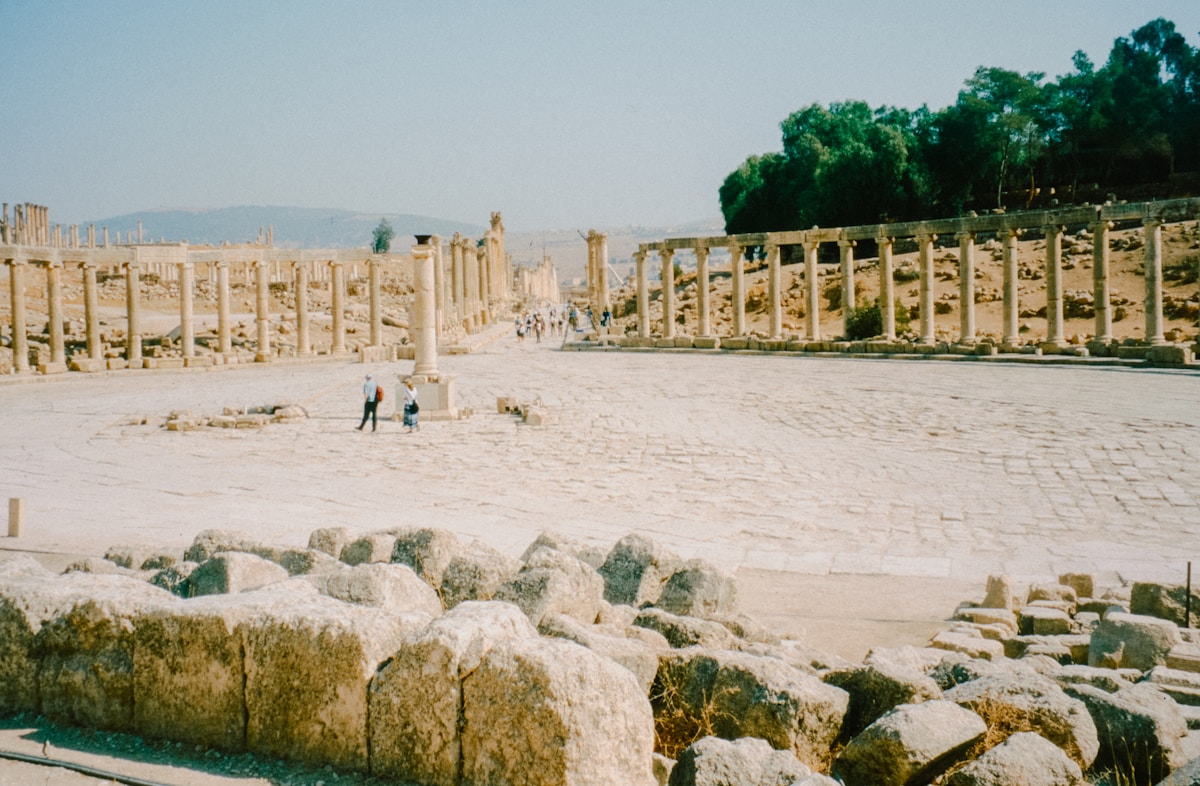
Bodrum’s history is one of the most layered and consequential in western Turkey. The site was ancient Halicarnassus - capital of the Carian kingdom, birthplace of Herodotus (the “Father of History”), and home of a royal tomb so extraordinary that it became one of the Seven Wonders of the Ancient World. The city’s stone was then systematically dismantled by Crusader knights to build a castle. The castle now houses a museum of underwater finds from Bronze Age shipwrecks. Each layer of this history is physically present in Bodrum today.
For the sites to visit, see things to do in Bodrum.
The Carians: pre-Greek inhabitants of the Aegean coast
Before the Greeks, the Aegean coast of Anatolia was inhabited by the Carians - a people of uncertain linguistic and ethnic origin (possibly Indo-European, possibly related to other Anatolian peoples) who occupied the coastal zone from approximately 2000 BCE onward. The Carians were experienced sailors, mercenaries, and traders; they appear in Egyptian, Hittite, and Greek sources, where they are noted as skilled fighters and recognisable by their crested helmets.
The Carian capital shifted between several cities over their history; Halicarnassus (modern Bodrum) became the most important Carian city from the 6th century BCE onward. The Carians adopted Greek culture and language from approximately the 5th century BCE while maintaining their own political structures.
The Mausoleum and the Hecatomnid dynasty (4th century BCE)
The most significant period in Halicarnassus’s history was the reign of the Hecatomnid dynasty - a line of Carian rulers who served as satraps (governors) under the Persian Empire while maintaining de facto independent power. The dynasty’s most famous member was Mausolus (reigned 377–353 BCE), who moved the Carian capital to Halicarnassus and undertook a building programme that transformed the city.
When Mausolus died in 353 BCE, his wife and sister Artemisia II commissioned a tomb of such scale and artistic ambition that it became one of the Seven Wonders of the Ancient World. The Mausoleum at Halicarnassus - 45m high, with 36 Ionic columns surrounding a massive pyramid roof, topped by a four-horse chariot statue - was designed by the Greek architects Satyros and Pytheos, with sculptural friezes by the most renowned Greek sculptors of the period: Scopas, Leochares, Bryaxis, and Timotheus.
The Mausoleum remained standing and largely intact for over 1,600 years. Earthquakes during the medieval period damaged the structure; the Knights of St. John finished the job in the 15th century, quarrying the polished marble and carved stone blocks for the new castle. The word “mausoleum” - from Mausolus’s name - entered every European language from this tomb.
What survives: The foundation cutting is visible at the site (entry ₺200). The frieze reliefs are divided between the British Museum’s Mausoleum Room (London) and the Bodrum Museum of Underwater Archaeology. The on-site scale model explains the original structure’s appearance.
Herodotus: born in Halicarnassus
Herodotus (c. 484–425 BCE), author of the Histories - the earliest surviving work of historical writing - was born in Halicarnassus. His Histories cover the Greco-Persian Wars but include extensive ethnographic and geographic digressions that describe the known world of the 5th century BCE. He is considered the “Father of History” and also (by Cicero) the “Father of Lies,” depending on your confidence in ancient sources.
A small statue of Herodotus stands near the Bodrum harbour - easy to miss but worth a moment’s acknowledgement given his significance to Western historical writing.
Alexander, the Greeks, and the Hellenistic period
Alexander the Great besieged Halicarnassus in 334 BCE - the city was defended by Memnon of Rhodes (a Greek mercenary commander employed by the Persians) and the Persian garrison. The siege was fierce; Alexander eventually took and partly burned the city. After the conquest, Halicarnassus became part of the Greek-speaking world and underwent Hellenisation - the Carian language effectively died out, replaced by Greek.
Under the Hellenistic successor kingdoms (Ptolemies, then Seleucids), Halicarnassus declined from its peak Carian-era importance. The theatre cut into the hillside above the modern town dates from this period (though subsequently modified by the Romans).
Roman and Byzantine periods
Under Rome, Halicarnassus was a provincial city within the Asian province - significant for its harbour but no longer a political capital. The Roman period contributed infrastructure (the harbour layout) but not major monuments that survive. Christianity arrived in the Byzantine period; the city became a bishopric.
The Byzantine period is largely invisible in Bodrum itself - the evidence was either destroyed or incorporated into later construction. The area was contested between Byzantine and Turkish forces from the 11th century onward as the Seljuk Turks expanded into western Anatolia.
The Knights of St. John and the Castle of St. Peter (15th century)
The most dramatic event in Bodrum’s recent history was the construction of the Castle of St. Peter (Bodrum Kalesi) beginning 1402. The Knights Hospitaller - the Crusader military order that had held Rhodes since 1309 - needed a mainland stronghold against the Ottoman expansion. They chose the Bodrum headland and, lacking a convenient stone quarry, systematically dismantled the still-largely-intact Mausoleum for building material.
The castle construction used Mausoleum marble, ancient column drums, and carved relief blocks (some visible in the castle walls today). The Knights built four main towers, each associated with a different nation of knights contributing forces: the English Tower, the French Tower, the German Tower, and the Italian Tower. Heraldic shields from European noble families are embedded in the walls throughout.
The Knights held the castle until 1522, when Suleiman the Magnificent’s successful siege of Rhodes rendered their Aegean position untenable. They surrendered Bodrum Castle without a fight and withdrew to Rhodes, then eventually to Malta.
The Ottoman period (1522–1923): Under Ottoman rule, Bodrum (the name derives from “Petronium” - the medieval name for the castle) was a quiet provincial town with a small port. The population was mixed Turkish and Greek until the 1923 population exchanges. The modern tourist development of Bodrum began in the 1960s when Turkish intellectual and cultural figures (most famously the writer Cevat Şakir Kabaağaçlı, who wrote under the pen name “Halikarnas Balıkçısı” - “The Fisherman of Halicarnassus”) established the town as an artists’ and writers’ retreat before mass tourism arrived.
Key historical timeline
| Date | Event |
|---|---|
| c. 2000 BCE | Carian settlement of the Aegean coast |
| 377 BCE | Mausolus begins reign; Halicarnassus becomes Carian capital |
| 353 BCE | Mausolus dies; Artemisia commissions the Mausoleum |
| c. 350 BCE | Mausoleum completed - Seven Wonders of the Ancient World |
| c. 484 BCE | Herodotus born in Halicarnassus |
| 334 BCE | Alexander the Great besieges and takes the city |
| 1402 CE | Knights of St. John begin Castle of St. Peter construction |
| 1522 | Ottoman conquest; Knights withdraw |
| 1923 | Turkish Republic; population exchanges |
| 1960s+ | Development as artists’ retreat; Halikarnas Balıkçısı era |
For the full archaeological context, the Museum of Underwater Archaeology in the castle (entry ₺300) is the essential companion to this history. For the wider historical region, see Marmaris history and Fethiye history.
Search hotels in Bodrum on Booking.com
Exploring the sites: Browse tours and activities in Bodrum for guided historical tours of Bodrum - expert commentary makes a significant difference at layered archaeological sites.