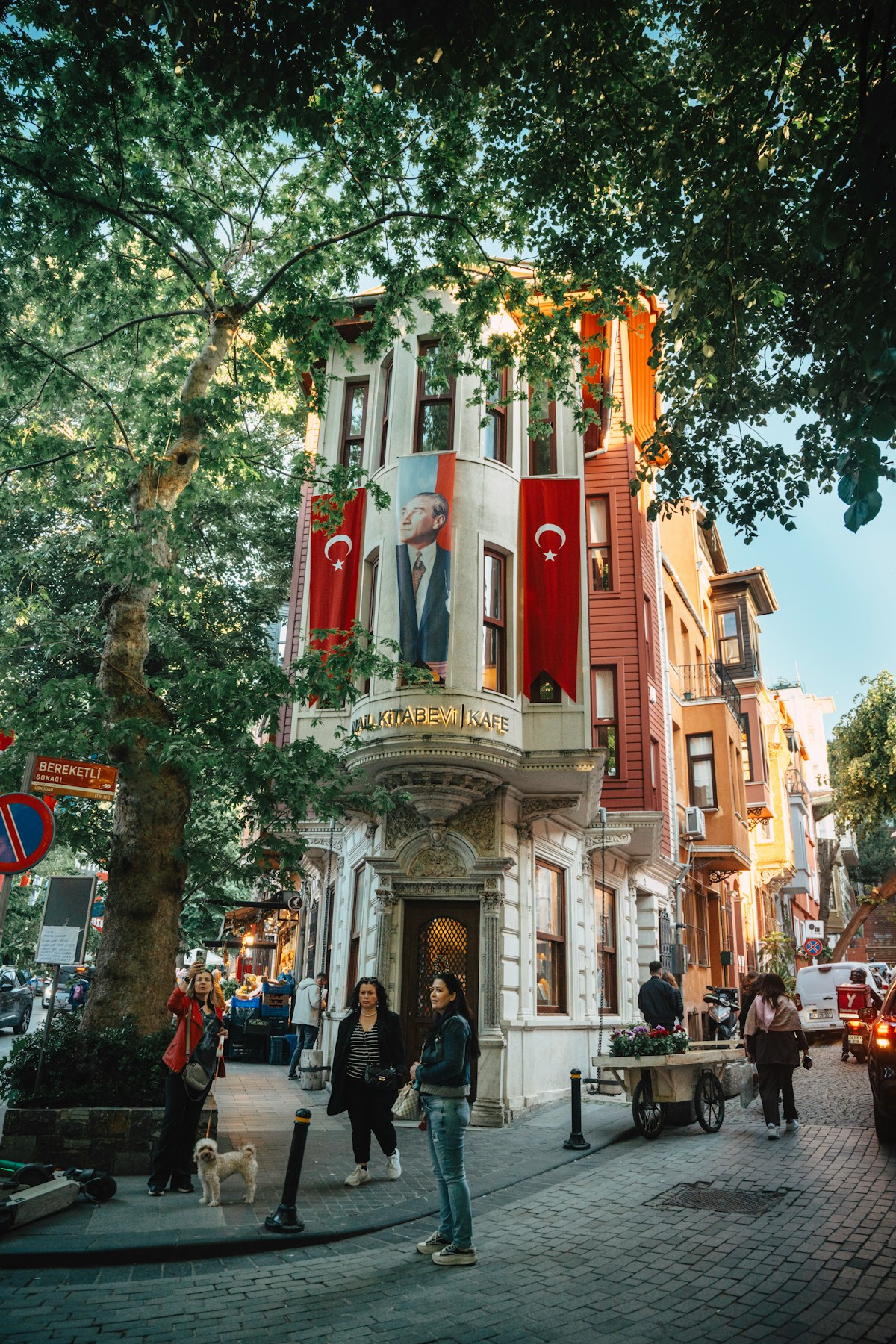
Eskişehir’s attractions are concentrated in two zones: the Odunpazarı district (Ottoman houses, OMM, meerschaum, the historic bazaar) and the Porsuk Canal waterfront (gondolas, canal-side cafés, Adalar park). The city is compact and walkable; a thorough two-day visit covers the main sites without rushing.
Odunpazarı district
The Odunpazarı neighbourhood - named for the historical timber market - is the most important heritage district in Eskişehir and one of the best-preserved Ottoman residential neighbourhoods in western Anatolia.
The houses: The defining visual of Odunpazarı is the timber-frame Ottoman houses in deep pigments - ochre, burgundy, dark blue, forest green - stacked up the hillside above the Porsuk. The restoration programme (accelerated after the 2019 OMM opening) has brought significant investment to the district; the buildings are better maintained now than at any point in the past century.
Walking the district: The main walking circuit takes 1.5–2 hours - from the tram stop near the OMM, through the cobbled lanes to the Kurşunlu Mosque, down past the copper bazaar to the Porsuk. The district is small enough to wander without a map; the streets are broadly pedestrianised.
Kurşunlu Mosque complex: The 16th-century mosque, with its lead-covered (kurşunlu) domes, stands at the upper edge of the district. The adjacent han and medrese form a small architectural complex. Open: Daily. Entry: Free.
The bazaar: Below the Ottoman houses, the old bazaar district has meerschaum shops, copper workshops, and the traditional market. More tourist-oriented than a working bazaar but the meerschaum work is genuine.
Odunpazarı Modern Museum (OMM)
Address: Atmeydanı Caddesi, Odunpazarı. Hours: Tuesday–Sunday, 10:00–19:00. Closed Monday. Entry: ₺150. Duration: 1.5–2.5 hours.
The OMM (Odunpazarı Modern Museum), opened 2019, is an exceptional contemporary art museum - architecturally significant (designed by Kengo Kuma, the interlocking timber modules deliberately echo the Ottoman houses below), and with a serious programme of Turkish and international contemporary art.
The building: Kengo Kuma’s interlocking cedar-clad volumes fit into the Odunpazarı hillside without dominating it - the timber aesthetic connects to both the Ottoman residential tradition and modern Japanese architecture. The museum has won significant international architecture prizes.
The collection: The permanent collection features significant Turkish contemporary artists (Burhan Doğançay, Fahrelnissa Zeid, among others) and the temporary programme brings international exhibitions. The quality of programming is above what you would expect from a city of Eskişehir’s size.
Practical: The museum café and shop are worth a visit in themselves - the café has canal views; the shop has thoughtful design objects related to the collection.
Porsuk Canal and Adalar
The Porsuk Canal - channelled through the city centre - is the heart of Eskişehir’s social life. The canal-side promenade runs for several kilometres; the Adalar (islands) park area has footbridges, canal-side cafés, and the gondola boarding points.
Gondolas: The Eskişehir gondolas (operating on the Porsuk) are a civic quirk that has become genuinely popular - tourist in concept, but used by students and local families as much as visitors. 20–30 minute rides. ₺80–120 per boat. Best in spring and autumn evenings.
Adalar park: The series of small islands connected by footbridges in the canal’s widened section is a pleasant walking circuit - willows, benches, cafés, and the constant presence of the canal. Good for morning coffee and evening walks.
Canal-side cafés: The concentration of cafés along the Porsuk - Avrupalı Sokak in particular - is the social centre of student Eskişehir. The cafés are functional rather than architecturally notable but the atmosphere (especially May–June and September evenings) is lively.
Meerschaum (lületaşı) workshops
Eskişehir sits on one of the world’s largest deposits of sepiolite - the white, heat-resistant clay used to make meerschaum pipes. The tradition of carving sepiolite is 400+ years old; the finest work involves intricate relief carving that can take weeks.
Visiting workshops: Several workshops in the bazaar and Odunpazarı district allow observation of the carving process - the raw white clay being shaped, the finishing in beeswax (which gives the characteristic honeyed colour to older pipes). No appointment needed for the bazaar workshops; some of the higher-end ateliers prefer advance notice.
Buying meerschaum: The range is enormous - from ₺100 tourist souvenir pipes to ₺10,000+ master-carved collectors’ pieces. The practical purchases: decorative figurines (₺150–400), small pipes (₺200–600), and presentation pieces (₺500–2,000). Authenticity: real sepiolite is cool to the touch and slightly chalky; imitation resin is warmer and smoother. The best shops will demonstrate the difference.
Meerschaum Museum: The Eskişehir Meerschaum Museum (within the city museum complex, Hasan Polatkan Müzesi) has historical examples of the carving tradition. Entry: ₺30. Hours: Tuesday–Sunday, 09:00–17:00.
Eskişehir City Museum complex
The museum cluster near the railway station includes several small specialist museums.
Glass Art Museum (Cam Eserleri Müzesi): Blown and cast glass works, with a focus on the local glassblowing tradition. ₺30.
Air and Space Museum (Havacılık Parkı): Outdoor display of retired aircraft from the Turkish Air Force, including Cold War-era jets. Popular with families. ₺30.
Ataturk Memorial House: The house where Atatürk stayed during his visits to Eskişehir - period rooms, personal effects, photographs. ₺20.
Practical: The museum cluster is near the train station; allow 2–3 hours for a thorough visit of two or three museums.
Phrygian Valley (Frig Vadisi) - day trip
Distance: 90–120km south of Eskişehir (Afyonkarahisar province, accessible via Kütahya). Duration: Full day or 2 days.
The Phrygian Valley is one of Turkey’s most undervisited archaeological landscapes - a volcanic plateau carved by erosion into formations that the Phrygians (8th–6th centuries BCE) incorporated into their cult practice and settlement.
What to see:
Midas City (Yazılıkaya): The most significant Phrygian monument - a monumental rock-cut facade (17m high) dedicated to the goddess Matar Kubileya (a Phrygian precursor to Cybele), with geometric patterns carved into the volcanic rock. The “MIDAI” inscription gives the site its name (the Phrygian king Midas is associated with the site, though the name may refer to the king rather than the person of legend).
Arslankaya: A carved Phrygian rock relief showing a lion goddess figure - smaller than Midas City but in better condition, with finer carving.
Ayazini cave settlement: A Byzantine cave monastery carved into the volcanic rock - cells, churches, cisterns. The landscape here (cone formations, carved caves) resembles a small-scale Cappadocia.
Access: Car is necessary for the Phrygian Valley circuit - the sites are spread over 40km of rural roads. A Kütahya-based guide (₺800–1,500/day) or a rent-a-car from Eskişehir covers the main sites in one full day.
Kütahya - half-day trip
Distance: 90km south (Bursa direction).
Kütahya is the centre of Turkey’s çini (painted ceramic) tradition - the tiles that decorate Ottoman mosques throughout Anatolia were produced here and in Iznik. The city has a well-preserved Ottoman core, a castle on the hill, and the tile bazaar.
For travellers: Kütahya çini is distinct from Iznik ware - more rustic, often with deeper blue and green pigments, slightly less refined. The bazaar workshops sell both tourist-grade and serious collector pieces. The Kütahya Archaeology Museum has good context on both the Phrygian and Ottoman periods.
Combined day trip: Kütahya old city (2 hours) + Phrygian Valley highlights (Midas City, Ayazini, 3 hours) is achievable in a full day by car.
Eskişehir sightseeing summary
| Site | Entry | Duration | Best for |
|---|---|---|---|
| Odunpazarı walk | Free | 1.5–2 hrs | Architecture, atmosphere |
| Odunpazarı Modern Museum | ₺150 | 1.5–2.5 hrs | Contemporary art |
| Porsuk Canal + Adalar | Free (gondola ₺80–120) | 1–2 hrs | Evening walks |
| Meerschaum workshops | Free | 30–60 min | Craft, shopping |
| Kütahya day trip | Low | Full day | Ceramics, Phrygian Valley |
Search hotels in Eskisehir on Booking.com
Booking in advance: Browse tours and activities in Eskişehir - guided walks, skip-the-line tickets, and day tours are bookable ahead with free cancellation.