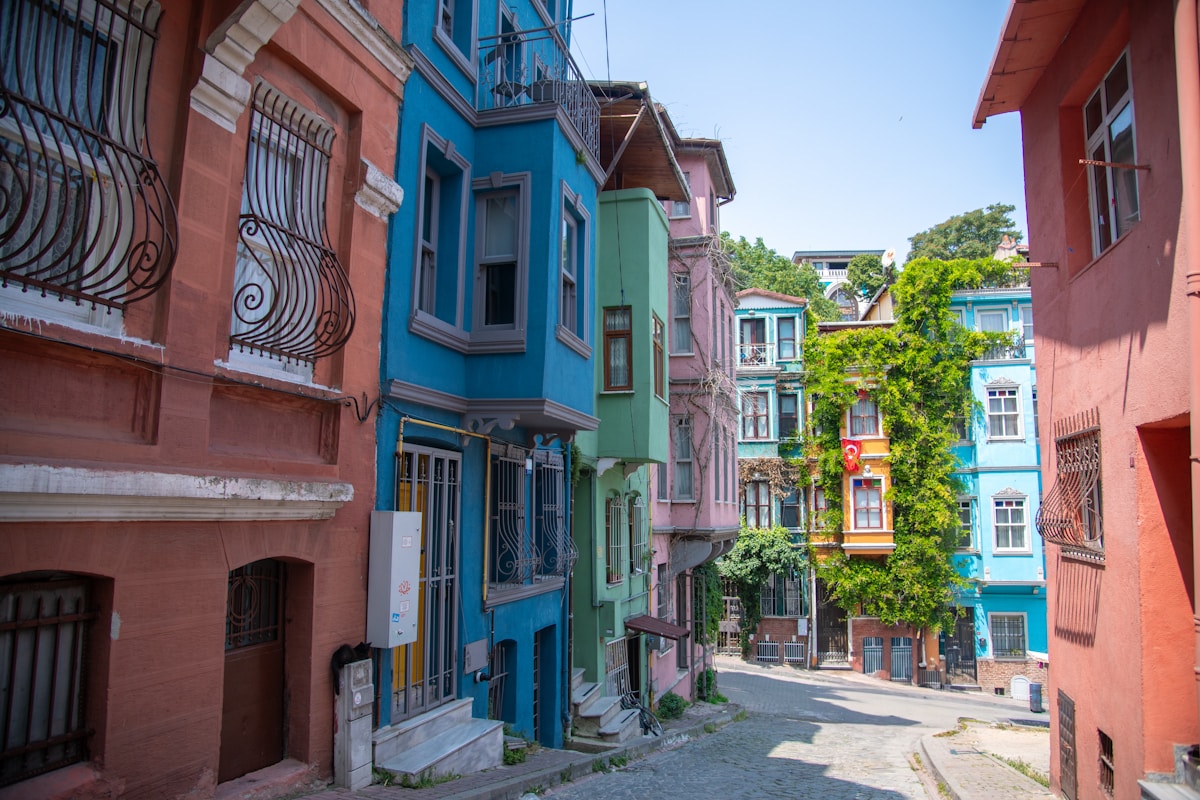
Eskişehir’s history is the history of a strategic plateau city at the junction of Anatolia’s east-west and north-south trade routes - a point that every conquering power from the Phrygians to the Ottomans needed to control. The modern city, built above the ancient site of Dorylaion, carries layers of Phrygian, Roman, Byzantine, and Ottoman history. The most recent historical layer - the Crimean Tatar migrations of the 19th century - has had the most visible effect on the city’s daily culture.
Phrygian Dorylaion
The ancient name of the site was Dorylaion - a Phrygian settlement on the fertile plateau where the Porsuk River offered water and the location controlled the routes between the Aegean coast and the Anatolian interior.
The Phrygians (c. 1200–700 BCE): The Phrygians dominated western and central Anatolia following the collapse of the Hittite Empire. Their kingdom (centred at Gordion, 50km northeast of Ankara) extended across the plateau; Dorylaion was within the Phrygian cultural sphere. The Phrygian monuments visible in the surrounding landscape - Midas City (Yazılıkaya), the rock-cut cult facades, the cave settlements - date from this period.
The Phrygian legacy: The Phrygians left no written records that survive, but their cult practices (centred on the goddess Matar Kubileya - a precursor to Cybele, the Great Mother goddess that later entered Greek and Roman religion) and their specific artistic vocabulary (the geometric patterns at Midas City, the meander motif that passed into Greek art) represent a significant cultural contribution. The name “Gordion” comes from the Phrygian king Gordias; “Midas” is the legendary king associated with the golden touch myth.
Roman and Byzantine Dorylaion
Under the Roman Empire, Dorylaion was a provincial town on the road network connecting Constantinople (via Nicaea/İznik) to the eastern provinces. The hot springs - the thermal springs that still operate as the Eskişehir spa complex - were known and used in the Roman period.
Byzantine importance: The Byzantine strategic position at Dorylaion was primarily defensive - the city guarded the western Anatolian plateau against incursions from the east. The Byzantine military road (the main east-west military artery of the empire) passed through Dorylaion, making it a supply and staging post for campaigns toward Armenia and Syria.
The Battle of Dorylaeum (1097): The First Crusade - the western European response to Pope Urban II’s call at Clermont in 1095 - reached Dorylaion in June 1097 after capturing Nicaea (İznik) from the Seljuk Turks.
At Dorylaion, the Crusader army under Bohemond of Taranto encountered the main Seljuk Turkish force under Sultan Kilij Arslan I. The battle (July 1, 1097) was one of the critical engagements of the First Crusade - the Crusaders, initially ambushed and in serious danger, were reinforced and ultimately routed the Seljuk army. The victory opened the Anatolian plateau to the Crusade’s march toward Antioch and Jerusalem.
Historical significance: The Battle of Dorylaion was not simply a local engagement - it established that the Crusader heavy cavalry could defeat Seljuk tactics in open field conditions, a strategic conclusion that shaped subsequent Crusade military thinking.
Seljuk and Mongol periods
The Seljuk conquest of Anatolia - which accelerated after the Battle of Manzikert (1071) - eventually brought Dorylaion into the Sultanate of Rum (the Seljuk state in Anatolia). The city was contested repeatedly between Byzantine and Seljuk forces through the 11th and 12th centuries.
Mongol invasion (1243): The Mongol victory at Köse Dağ (1243) ended Seljuk power in Anatolia. The Ilkhanate (Mongol successor state) controlled much of Anatolia through the late 13th century; the political fragmentation that followed produced the small Anatolian beyliks (principalities) that preceded Ottoman unification.
Ottoman Eskişehir (14th century onward)
The Ottoman beylik (principality) absorbed the region in the early 14th century as the Seljuk state fragmented. Eskişehir - the name means “old city” in Turkish, suggesting it was already a significant settlement when the Ottomans arrived - became an Ottoman administrative and commercial centre.
The timber trade: The Odunpazarı (Timber Market) district - the origin of the Ottoman residential neighbourhood - takes its name from the timber trade that anchored the Ottoman city’s economy. Timber from the forests of the plateau (in the pre-deforestation era) and the trade in lumber were commercial foundations of the city.
The bazaar development: The Ottoman han and bazaar system - the infrastructure that supported long-distance trade - developed around the same commercial zone. The Kurşunlu Mosque complex (16th century, with its lead-covered domes) was part of this commercial-religious investment.
The hot springs: The thermal springs outside the Ottoman city were known and used; the Ottoman bath (hamam) culture was overlaid on the earlier Roman and Byzantine spa tradition.
The Crimean Tatar migrations (1860s–1870s)
The most consequential event in modern Eskişehir’s history was the arrival of the Crimean Tatar refugees - a migration that transformed the city’s demographic composition and left permanent marks on its culture.
The Crimean War and its aftermath: The Crimean War (1853–1856) ended with the Crimean Peninsula remaining under nominal Ottoman suzerainty but with growing Russian pressure. The 1860s saw accelerating Russian colonisation of Crimea and the systematic displacement of the Tatar population. Between 1856 and 1876, approximately 200,000–300,000 Crimean Tatars migrated to Ottoman territories.
Settlement in Eskişehir: The Ottoman government settled Tatar refugees in various Anatolian cities; Eskişehir received a significant community. The Tatars brought their pastry and dumpling traditions (çibörek, Tatar mantısı), their specific agricultural practices, and their cultural associations.
Integration: The Crimean Tatar community of Eskişehir integrated into Turkish society over the following generations - Turkish-speaking, Muslim, and Ottoman-identified - while retaining specific cultural practices. The food traditions are the most visible remnant; the Crimean Tatar Cultural Association (still active in Eskişehir) maintains historical memory.
Additional Balkan migrations: The late 19th and early 20th centuries brought additional Muslim refugee communities to Eskişehir from the Balkans (Bosnia, Bulgaria, and the Macedonian territories lost in the Balkan Wars 1912–1913). Each wave added to the city’s demographic and cultural complexity.
Republican Eskişehir
The Turkish War of Independence passed through the Eskişehir area - the Greek advance into western Anatolia (the Greco-Turkish War, 1919–1922) reached Eskişehir, which was occupied by Greek forces in 1921 before the Turkish counteroffensive. The İnönü battles (January and April 1921, at the İnönü pass 40km west of Eskişehir) were among the first Turkish nationalist military victories of the War of Independence; the İnönü victory was significant enough that İsmet Pasha (the commanding general) took the surname İnönü in 1934.
Industrial development: Eskişehir developed as an industrial centre under the Republic - railway workshops (the TÜLOMSAŞ locomotive factory, founded 1894 under the Ottoman state, became a major employer), military aviation (the air base established in the city), and manufacturing.
Anadolu University: Founded in 1958, Anadolu University grew to become one of Turkey’s largest universities by enrollment. The university’s distance education programme (one of the world’s largest) accounts for the bulk of its student numbers; the on-campus student population of approximately 25,000 still shapes city life substantially.
The OMM and contemporary identity: The 2019 opening of the Odunpazarı Modern Museum (in the restored Odunpazarı district, designed by Kengo Kuma) marked a deliberate cultural investment - the city choosing to define itself through contemporary arts as well as Ottoman heritage and university life.
Historical timeline
| Period | Event |
|---|---|
| c. 700 BCE | Phrygian settlement at Dorylaion |
| July 1097 | Battle of Dorylaion - First Crusade defeats Seljuk forces |
| 1243 | Mongol victory at Köse Dağ; Seljuk power ends |
| c. 1335 | Ottoman absorption of the region |
| 16th c. | Kurşunlu Mosque complex built |
| 1860s–1870s | Crimean Tatar mass migration; community settles in Eskişehir |
| January 1921 | First Battle of İnönü - Turkish nationalist victory |
| April 1921 | Second Battle of İnönü - Greek advance halted |
| 1921 | Greek forces occupy Eskişehir briefly |
| 1922 | Turkish counteroffensive; city retaken |
| 1958 | Anadolu University founded |
| 2019 | Odunpazarı Modern Museum opens |
Search hotels in Eskisehir on Booking.com
Exploring the sites: Browse tours and activities in Eskişehir for guided historical tours of Eskişehir - expert commentary makes a significant difference at layered archaeological sites.