Konya Travel Guide 2026: Rumi''s City, Whirling Dervishes
Konya travel guide: Mevlâna Mausoleum, whirling dervishes, Karatay Ceramics Museum, Çatalhöyük day trip and Turkey's most sacred city.
Guides for Konya
Konya is Turkey’s most important city for Islamic spiritual heritage - the city where Jalāl al-Dīn Rumi (Mevlânâ) lived, taught, and was buried, and the home of the Mevlevi order whose practice of the sema (the whirling ceremony) is one of the most visually distinctive spiritual traditions in the world. It is also one of Turkey’s largest cities (population 2.3 million), the agricultural capital of the central Anatolian plateau, and a city with significant Seljuk architectural heritage from its period as the capital of the Seljuk Sultanate of Rum.
For visitors, Konya is primarily a pilgrimage destination - Turkish and international Muslims visiting the Mevlâna Mausoleum. Beyond the mausoleum, the Karatay and Ince Minaret theological schools (now ceramics and stone carving museums) are among the finest surviving Seljuk buildings in Turkey. Çatalhöyük - a Neolithic settlement occupied from 7500 to 5700 BCE - is 50km south.
What makes Konya significant
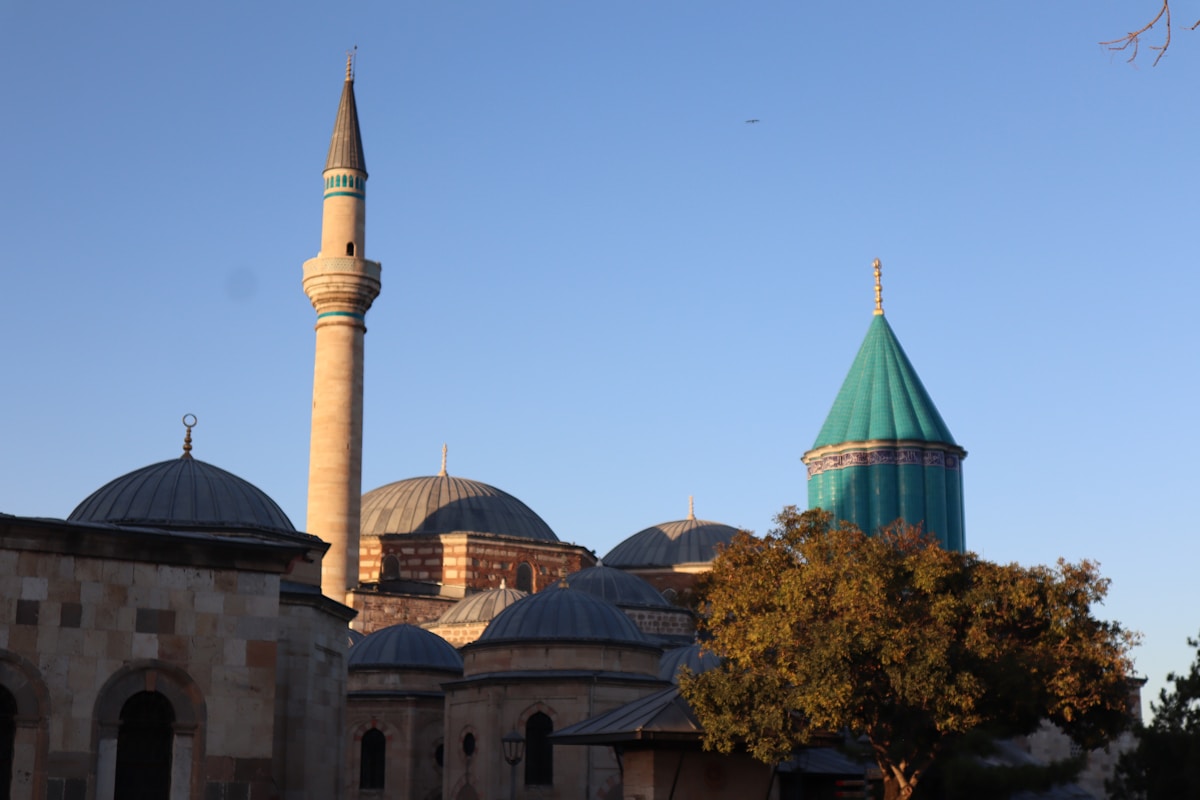
Mevlâna Mausoleum (Mevlâna Türbesi): The tomb of Jalāl al-Dīn Rumi, 13th-century Sufi poet and philosopher - one of Turkey’s most visited sites, receiving 3–4 million visitors annually. The turquoise-tiled cylindrical drum of the mausoleum dome is the defining image of the city. Entry: free.
Sema ceremony (whirling dervishes): The Mevlevi order’s ritual ceremony - the sema - is performed weekly in Konya throughout the year. The turning of the semazen (whirling dervish) in white robes is one of Islam’s most distinctive visual expressions. UNESCO Intangible Cultural Heritage.
Seljuk architecture: Konya was the capital of the Seljuk Sultanate of Rum (1077–1308 CE). The Karatay Medrese (1251), Ince Minaret Medrese (1265), and the Alâeddin Mosque on the hilltop are the finest Seljuk buildings in Anatolia.
Çatalhöyük: One of the world’s earliest and largest Neolithic settlements (c. 7500–5700 BCE), 50km south of Konya. UNESCO World Heritage Site. The objects from the site are in Ankara’s Museum of Anatolian Civilisations; the excavation itself is accessible.
Daily costs
| Category | Budget | Mid-range |
|---|---|---|
| Accommodation | ₺500–1,100 | ₺1,100–3,000 |
| Food | ₺200–380 | ₺380–700 |
| Activities | ₺50–200 | ₺200–400 |
| Transport | ₺40–100 | ₺100–250 |
| Total/day | ₺790–1,780 | ₺1,780–4,350 |
When to visit
April–May and September–October are the best months. The central Anatolian plateau climate means hot, dry summers (30–38°C) and cold winters (−2 to 8°C). Spring and autumn give comfortable temperatures for visiting Çatalhöyük and the Seljuk monuments without extreme heat.
December (Şeb-i Arus): The Mevlevi ceremony of Şeb-i Arus (the anniversary of Rumi’s death, 17 December) is the most significant event in Konya’s calendar - thousands of pilgrims arrive and the city’s atmosphere is distinctive. Book accommodation 2–3 months ahead for this period.
July–August: Hot and dry; the Mevlâna Mausoleum is open but the summer heat makes outdoor Çatalhöyük visits uncomfortable (plan early morning). Indoor accommodation is air-conditioned throughout.
Connections
Konya Havalimanı (KYA) has limited domestic routes; most travellers arrive by high-speed rail (YHT) from Ankara (1.5 hours, ₺80–150) or Istanbul (Pendik, 4.5 hours). Intercity bus from Istanbul: 10–11 hours. Konya is on the high-speed rail network.
For an in-depth guide to the Sema ceremony - venues, what to expect, etiquette, and the difference between a cultural show and the real thing - see our Whirling Dervishes guide.
Key sights with practical details
Mevlâna Mausoleum (Mevlâna Türbesi): Free entry. Open daily 09:00–17:30 (Mondays from 10:00). Women must cover their heads (scarves available at the entrance). The mausoleum complex includes the tomb room, the Semahanesi (whirling chamber), and a museum of Mevlevi artefacts. Allow 1.5–2 hours for the complex. Browse Konya tours and activities on GetYourGuide to book evening Sema (whirling dervish) performances and guided tours of the Seljuk monuments.
Karatay Medrese Ceramics Museum: Entry ₺100. A 13th-century Seljuk theological school now housing Seljuk tilework and ceramics — the tile collection is one of the best in Turkey. 10-minute walk from the Mevlâna.
Ince Minaret Medrese (Stone Carving Museum): Entry ₺100. The Seljuk stone carving collection includes architectural fragments from mosques and palaces across the Konya region. The portal of the medrese itself is considered one of the finest examples of Seljuk stonework.
Alâeddin Mosque (Alâeddin Tepesi): Free entry. The hilltop mosque dates from 1220 CE; the hill is a Neolithic tel with layers of civilisation below. The view from the hilltop over Konya is the best in the city.
Getting around Konya
Tram: Konya has a tram network (KoTaş, ₺10 per ride) connecting the YHT station, the city centre, and the university. The tram stop near the Mevlâna is the main visitor transit point.
On foot: The central monuments are compact — the Mevlâna, Karatay, Ince Minaret, and Alâeddin Hill are all within 20 minutes on foot of each other.
Çatalhöyük day trip: No direct public transport. Organised tours from Konya: approximately ₺300–500/person. Taxi for the day: ₺400–600 return including waiting time. The site museum contains the original excavation finds; plan 2–3 hours.
Konya food culture
Konya has a strong Anatolian food tradition: etli ekmek (long thin flatbread with minced lamb, baked in a wood oven — Konya’s signature street food), fırın sütlaç (baked rice pudding), and lamb-based soups. Most city-centre restaurants are halal-certified. A full etli ekmek lunch at one of the bread-focused restaurants around the Alaeddin area costs ₺80–150 for a full portion. Konya also sits at the crossroads of Cappadocia (2.5 hours by bus) and Ankara (1.5 hours by YHT rail) - see our Cappadocia travel guide for combining both on a single trip.
- Things to do in Konya
- Where to stay in Konya
- Best hotels in Konya
- Best restaurants in Konya
- Food to try in Konya
- Vegan food in Konya
- Best cafes to work in Konya
- Konya food guide
- History of Konya
- Hiking near Konya
- Digital nomad in Konya
- Day trips from Konya
- Whirling Dervishes in Turkey
Search hotels in Konya on Booking.com
Getting there: Flights to Turkey connect via Istanbul with most European carriers. For a door-to-door arrival, pre-book an airport transfer for fixed-price, hassle-free pickup. An eSIM for Turkey activates before you land and keeps you connected from the moment you clear arrivals.
Book an experience
Top experiences in Konya
Explore the best tours and activities in Konya, with instant confirmation and free cancellation on most bookings.