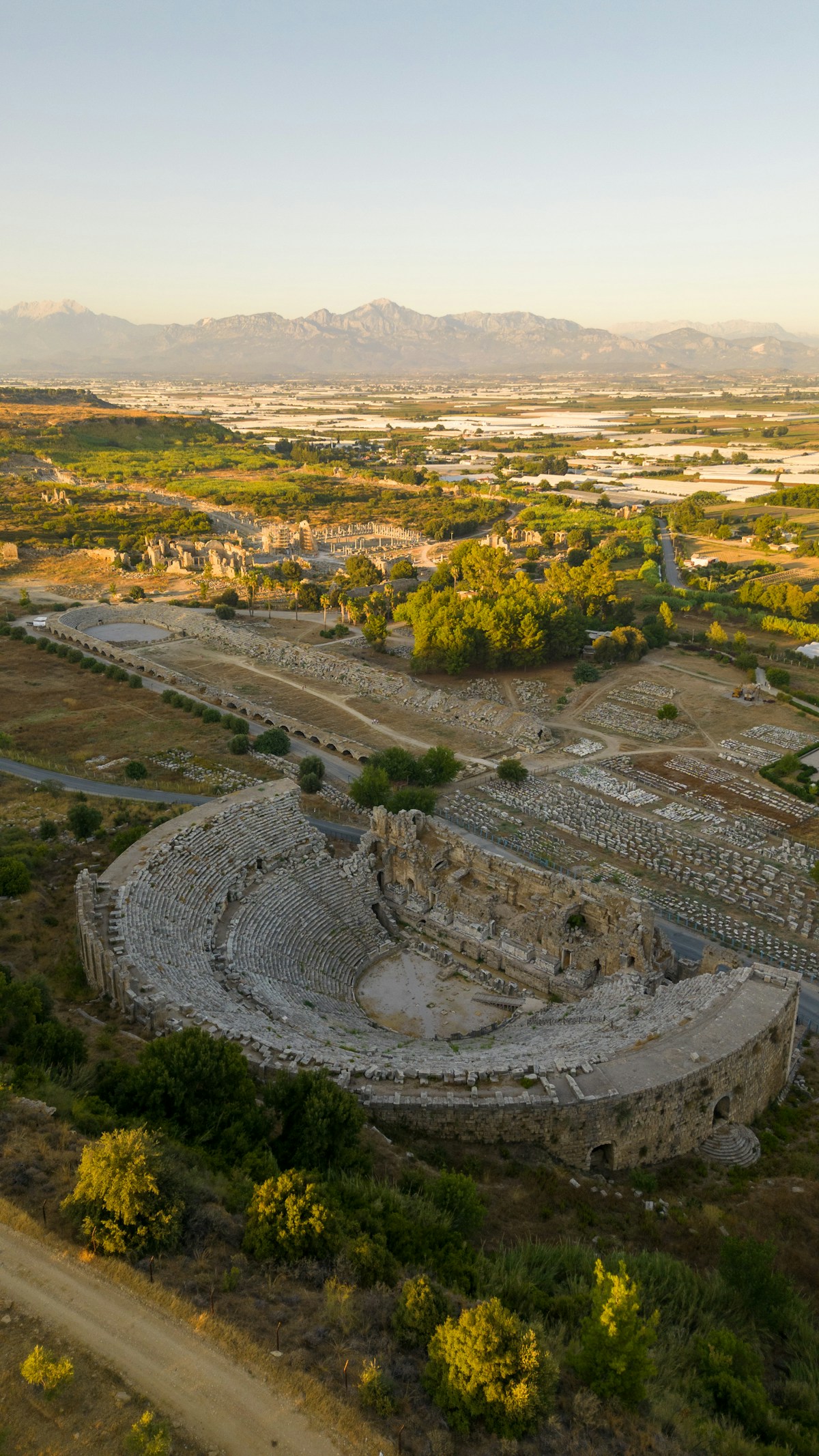
Antalya occupies one of the Mediterranean world’s most continuously inhabited corners - a natural harbour at the base of limestone cliffs, sheltered by mountains, facing a sea that once connected the ancient world. The city’s history is readable in its physical layers: a Hellenistic harbour foundation, Roman marble gates, Byzantine church conversions, Seljuk minarets, and Ottoman mansions, all compressed into the walled Kaleiçi district that visitors can walk in an afternoon. Understanding those layers changes what the city looks like.
For what to do with this historical knowledge in practice, see things to do in Antalya. For the archaeological context from local finds, visit the Antalya Museum.
Foundation: Attalos II and the Attalid Kingdom (2nd century BCE)
Antalya’s founding is unusually well-documented for an ancient city. The Attalid king Attalos II of Pergamon dispatched an expedition in approximately 150 BCE to find the best harbour on the south Anatolian coast for a new city. His scouts returned to report that the site - a deep natural harbour at the foot of tall cliffs, with the Taurus mountains providing defensive depth inland - was, in their words, heaven on earth (the phrase survives in Byzantine sources). Attalos founded the city and named it Attaleia after himself.
The Attalid dynasty had been Rome’s ally for generations; when the last Attalid king died without heirs in 133 BCE, he bequeathed his entire kingdom - including Attaleia - to Rome. The Romans acquired the city without a siege.
Roman period: a Mediterranean hub (2nd century BCE – 4th century CE)
Under Roman rule, Attaleia grew into a significant Mediterranean port. The Roman harbour - the same harbour still used as Kaleiçi marina today - was the operational base for Pompey’s campaign against the Cilician pirates in 67 BCE, which effectively cleared the eastern Mediterranean of organised piracy and restored trade routes.
The most visible Roman legacy is Hadrian’s Gate (Hadrianus Kapısı), built in 130 CE to commemorate Emperor Hadrian’s visit to the city. This triple-arched triumphal gate - marble-faced, with reliefs of Nike (Victory) figures in the spandrels - stands fully intact at the junction between the modern city and Kaleiçi. It is one of the best-preserved Roman triumphal gates in the Mediterranean.
The city walls that still encircle Kaleiçi were also substantially Roman in their original form - though modified by Byzantine, Seljuk, and Ottoman hands subsequently. The harbour tower at the edge of the marina (Hıdırlık Kulesi, 2nd century CE) is Roman construction, its function debated: lighthouse, tomb, or watchtower, possibly all three at different times.
What survives: Hadrian’s Gate (in situ, free to view), Hıdırlık Tower (harbour promenade, free to view), the harbour layout itself (Roman engineering, continuously used for 2000 years), and an exceptional collection of finds at the Antalya Museum including the Hall of the Gods - 14 marble statues from the agora at Perge, 2nd century CE.
Byzantine period: Christian city on the eastern frontier (4th–11th centuries CE)
The conversion of the Roman Empire to Christianity under Constantine in the 4th century transformed Attaleia - its temples converted or demolished, new churches built, and the city becoming a bishopric. The most visible remnant of this transformation is Kesik Minare (the Truncated Minaret), whose lower walls are a converted Roman temple (possibly dedicated to Dionysus), subsequently rebuilt as a Byzantine church, then converted to a mosque. The minaret stub was added in the Ottoman period; the building has been roofless since a fire in the 19th century. Each layer of its history is legible in the stonework.
Byzantine Antalya was prosperous but increasingly peripheral - the great Byzantine cities were Constantinople, Thessaloniki, and Antioch. The city’s importance lay in its harbour, which remained the primary connection between Constantinople and the eastern Mediterranean.
The Crusades brought Byzantine Antalya to unexpected prominence. The First Crusade (1096–1099) passed through the region; the Second Crusade (1147–1148) saw the French Crusader forces, under King Louis VII, embark from Attaleia’s harbour for the Holy Land after a catastrophic overland march through Anatolia. The harbour was their last point of contact with a nominally Christian city before Antioch.
In 1207, the Seljuk Turks under Sultan Gıyaseddin Keyhüsrev I took Antalya from the Byzantines. The city’s religious and ethnic character began its slow transformation.
Seljuk period: a new skyline (13th century)
The Seljuk Sultanate of Rum, based in Konya, transformed Antalya’s architectural character. Yivli Minare (the Fluted Minaret, 1230 CE) - built by the Seljuk Sultan Alaeddin Keykubad I alongside a mosque conversion of a Byzantine church - is the most distinctive element of Antalya’s skyline. The 13-sided red brick minaret, with its distinctive carved fluting, is the symbol of the city. The mosque at its base remains active; the minaret is visible from the harbour and throughout the old town.
The Seljuks also built the Karatay Medrese (theological school), the Kesik Minare mosque conversion, and extended the city walls. This period established the characteristic Islamic urban form within the Byzantine walls that remains in Kaleiçi today.
Ottoman period: integration and the tobacco trade (14th–19th centuries)
Ottoman control of Antalya (from 1391, settled definitively after 1424) brought the city into the larger Ottoman economy. Antalya’s significance in the Ottoman period was primarily commercial - a harbour connecting the Anatolian interior’s agricultural products (tobacco, cotton, dried fruit) to Mediterranean trade networks.
The Ottoman residential architecture visible in Kaleiçi today - the two and three-storey wooden-frame stone houses with projecting upper floors (cumbalı ev, bay-windowed houses) - dates primarily from the 18th and 19th centuries. These buildings are now boutique hotels, restaurants, and private residences. The form is consistent: ground floor of cut stone, upper floor of timber frame with plaster infill, a projecting upper floor that shades the street below.
The 19th century brought modernisation - a clock tower (Saat Kulesi) near the entrance to Kaleiçi, built 1901 as part of the wider Ottoman modernisation drive, and the expansion of the city beyond the Roman walls into what is now the modern city centre.
20th century: from Ottoman port to Turkish Riviera
Antalya transferred to the Turkish Republic in 1923 following the War of Independence and the population exchanges that accompanied it. The city’s Greek and Armenian communities, which had been significant through the Ottoman period, were displaced; Turkish Muslim populations from Greece were resettled here.
The transformation of Antalya into a resort destination began in the 1970s and accelerated dramatically in the 1980s–1990s with the development of the Lara resort strip and the construction of Antalya Airport’s international terminal. The city’s population grew from approximately 100,000 in 1970 to over one million today; its airport now handles more international flights in summer than many European hub airports.
Kaleiçi was preserved and restored through the late 20th century - the Ottoman houses converted to boutique hotels, the Roman and Byzantine walls stabilised. The result is an unusually intact historic urban core within a rapidly grown modern city.
Timeline: Antalya’s key historical dates
| Date | Event |
|---|---|
| c. 150 BCE | Founded by Attalos II of Pergamon |
| 133 BCE | Bequeathed to Rome with rest of Attalid kingdom |
| 67 BCE | Pompey uses harbour for anti-piracy campaign |
| 130 CE | Hadrian’s Gate built for Emperor Hadrian’s visit |
| 4th century CE | Christianisation; temple-to-church conversions |
| 1097 | First Crusade forces pass through |
| 1148 | Louis VII embarks from harbour for Holy Land |
| 1207 | Seljuk conquest under Keyhüsrev I |
| c. 1230 | Yivli Minare (Fluted Minaret) built |
| 1391–1424 | Ottoman consolidation |
| 1923 | Turkish Republic; population exchanges |
| 1970s+ | Resort development begins |
Where to see Antalya’s history
| Site | Era | Entry | Location |
|---|---|---|---|
| Hadrian’s Gate | Roman, 130 CE | Free | Kaleiçi entrance |
| Hıdırlık Tower | Roman, 2nd cent CE | Free | Harbour promenade |
| Kesik Minare | Roman/Byzantine/Ottoman | Free (exterior) | Kaleiçi |
| Yivli Minare | Seljuk, c. 1230 CE | Free (exterior) | Kaleiçi/harbour |
| Antalya Museum | All eras | ₺250 | Tram: Müze stop |
| Perge | Greek/Roman city | ₺300 | 17km northeast |
| Aspendos | Roman theatre | ₺300 | 47km east |
| Termessos | Pisidian/Hellenistic | ₺400 | 30km northwest |
For the wider ancient site context around Antalya - Perge, Aspendos, Termessos, and Side - see things to do in Antalya. For Antalya’s relationship to the broader Lycian and Pisidian civilisations of the region, see Kaş history and Fethiye history.
Search hotels in Antalya on Booking.com
Exploring the sites: Browse tours and activities in Antalya for guided historical tours of Antalya - expert commentary makes a significant difference at layered archaeological sites.