Kaş History: Ancient Antiphellos and the Lycian League
Book an experience
Things to do here
The top-rated tours and activities here — all with instant confirmation and free cancellation on most bookings.
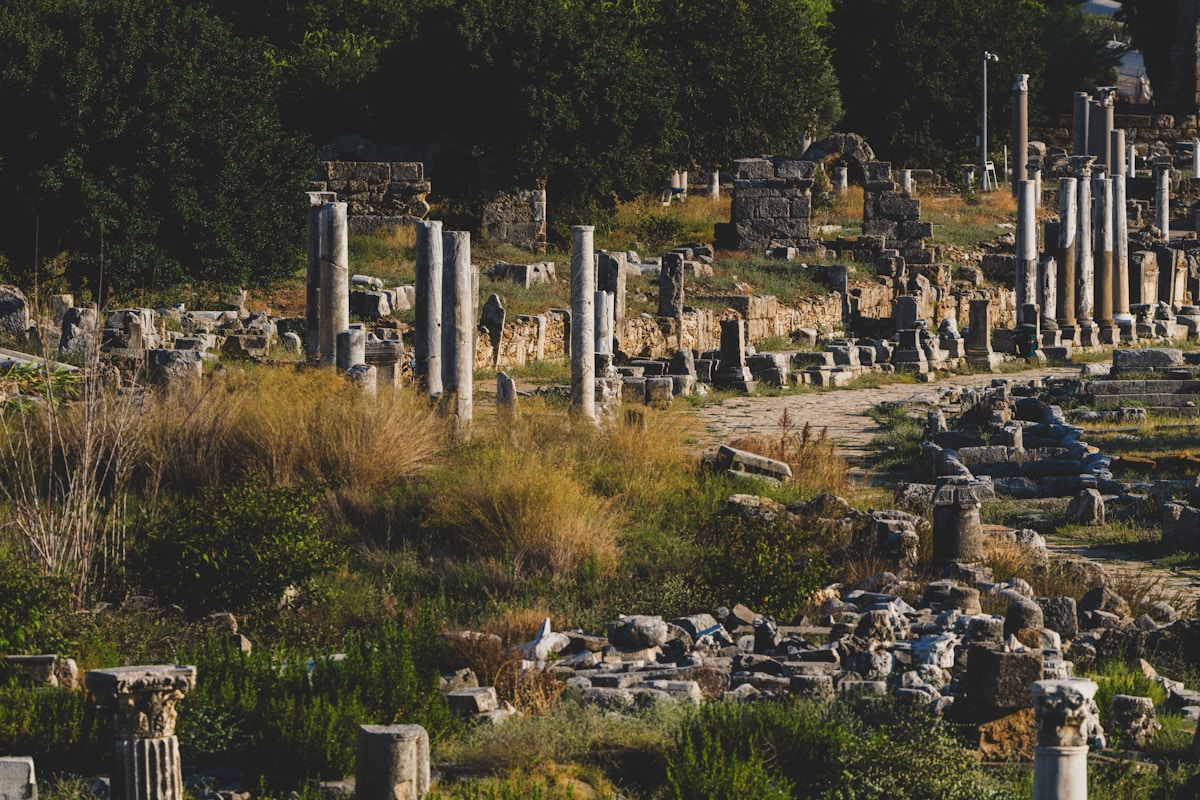
Kaş is built on the site of ancient Antiphellos — a harbour city in the Lycian League, the ancient confederation of cities that covered southwestern Anatolia and became, to American Founding Fathers, a model for federal democratic governance. The rock tombs above the modern town, the small Hellenistic theatre, and scattered archaeological remains in the streets represent two millennia of continuous habitation on this harbour.
For the sites to visit, see things to do in Kaş.
Lycia and Antiphellos
The Lycians were the dominant people of the southwestern Anatolian coast from at least 1200 BCE — mentioned in Hittite records, depicted in Egyptian tomb paintings, and described at length by Herodotus. Their distinctive culture included the rock tomb tradition (elaborate facades cut directly into cliffs, the size and decoration reflecting the occupant’s status), a unique script and language (fully deciphered only in the 20th century), and a political structure that was genuinely innovative.
Antiphellos (the ancient name of Kaş) was a harbour city and a member of the Lycian League — one of 23 cities in the confederation. The Lycian League allocated voting power to cities based on size: the largest cities had 3 votes, medium cities 2, and smaller cities 1. The League had a democratic assembly, elected representatives, and a constitution. This structure was studied by Montesquieu and, through him, influenced James Madison’s thinking during the drafting of the United States Constitution.
The Lion Tomb above Kaş — 4th century BCE, one of the finest surviving Lycian rock tombs — indicates a city of sufficient wealth and status to commission major funerary monuments. The Doric Tomb (also above the town) is earlier, 5th century BCE, in the Doric architectural order — Lycian funerary architecture borrowed from Greek architectural vocabulary while serving Lycian religious purposes.
Alexander, the Hellenistic period, and Rome
Alexander the Great’s campaign through Lycia in 334–333 BCE brought most Lycian cities into the Macedonian sphere — Antiphellos, like other Lycian harbours, was absorbed without significant resistance. The Hellenistic period that followed brought Greek language and cultural influence; the Lycian language gradually declined.
The Hellenistic Theatre now visible in Kaş dates to this period — a small theatre of approximately 1,000 seats, built on the hillside above the harbour in the characteristic Hellenistic style. It represents the Hellenisation of the city in the 2nd–1st century BCE — a theatre being one of the most characteristic Greek civic institutions.
Under Rome (from 43 CE, when Claudius formally annexed Lycia as a province), Antiphellos continued as a harbour town within the larger Lycian economy. The Roman period brought infrastructure — road improvements, harbour works — but Antiphellos was not a major Roman city; it was secondary to Patara, Xanthos, and Myra within the Lycian region.
Byzantine and medieval periods
Christianity arrived in Lycia in the 4th century CE; the region produced one of the most significant early Christian figures — Nicholas, Bishop of Myra (Demre, 45km east), the 4th-century bishop whose reputation for generosity eventually transformed into the Santa Claus legend. The Lycian coast was within the Byzantine sphere throughout the medieval period, declining in importance as the empire contracted.
The Arab maritime raids of the 7th–10th centuries destabilised the coastal cities; Antiphellos contracted. The crusading period (11th–14th centuries) saw the Lycian coast intermittently within the Crusader orbit — the Hospitallers (who built the Bodrum castle) had interests throughout the region.
The Seljuk and subsequently Ottoman Turkish consolidation of the coast from the 14th century brought Kaş into the Ottoman provincial system. The town, known in Ottoman records primarily for its harbour, served as a small trading port.
The Greek community and the 1923 exchange
Like most Lycian coastal settlements, Ottoman Kaş had a mixed population of Turks and Greek Orthodox Christians. The 1923 population exchange (mandated by the Treaty of Lausanne) resulted in the relocation of the Greek community to Greece and Turkish Muslim settlers arriving from former Ottoman territories in Greece.
The impact on Kaş was less dramatic than at Kayaköy (where an entire village was abandoned) — the incoming population settled in and continued the town. The Greek architectural legacy is visible in several of the older town houses.
20th century: from fishing town to diving destination
Kaş remained a small fishing and trading town through most of the 20th century. The development of recreational diving in the 1970s–1980s, combined with the coastal tourism development that reached the Turquoise Coast from Bodrum and Fethiye, began the transformation. Kaş’s development has been controlled — height regulations, building restrictions — creating a tourist town that has retained its character better than most equivalents on the Mediterranean.
Historical timeline
| Date | Event |
|---|---|
| c. 5th century BCE | Doric Tomb constructed |
| c. 4th century BCE | Lion Tomb; Antiphellos at its Lycian peak |
| 334–333 BCE | Alexander the Great’s campaign through Lycia |
| c. 2nd–1st century BCE | Hellenistic Theatre constructed |
| 43 CE | Rome formally annexes Lycia |
| 4th century CE | Christianisation; Bishop Nicholas at Myra |
| 7th–10th century | Arab raids; coastal instability |
| 14th–15th century | Ottoman consolidation |
| 1923 | Population exchange; Greek community relocated |
| 1970s–1980s | Dive tourism begins; Kaş gains international profile |
For the wider Lycian context, see Fethiye history and Antalya history.
Ready to explore?
Browse hundreds of tours and activities. Book securely with free cancellation on most options.
Browse on GetYourGuide →We may earn a small commission — at no extra cost to you.